






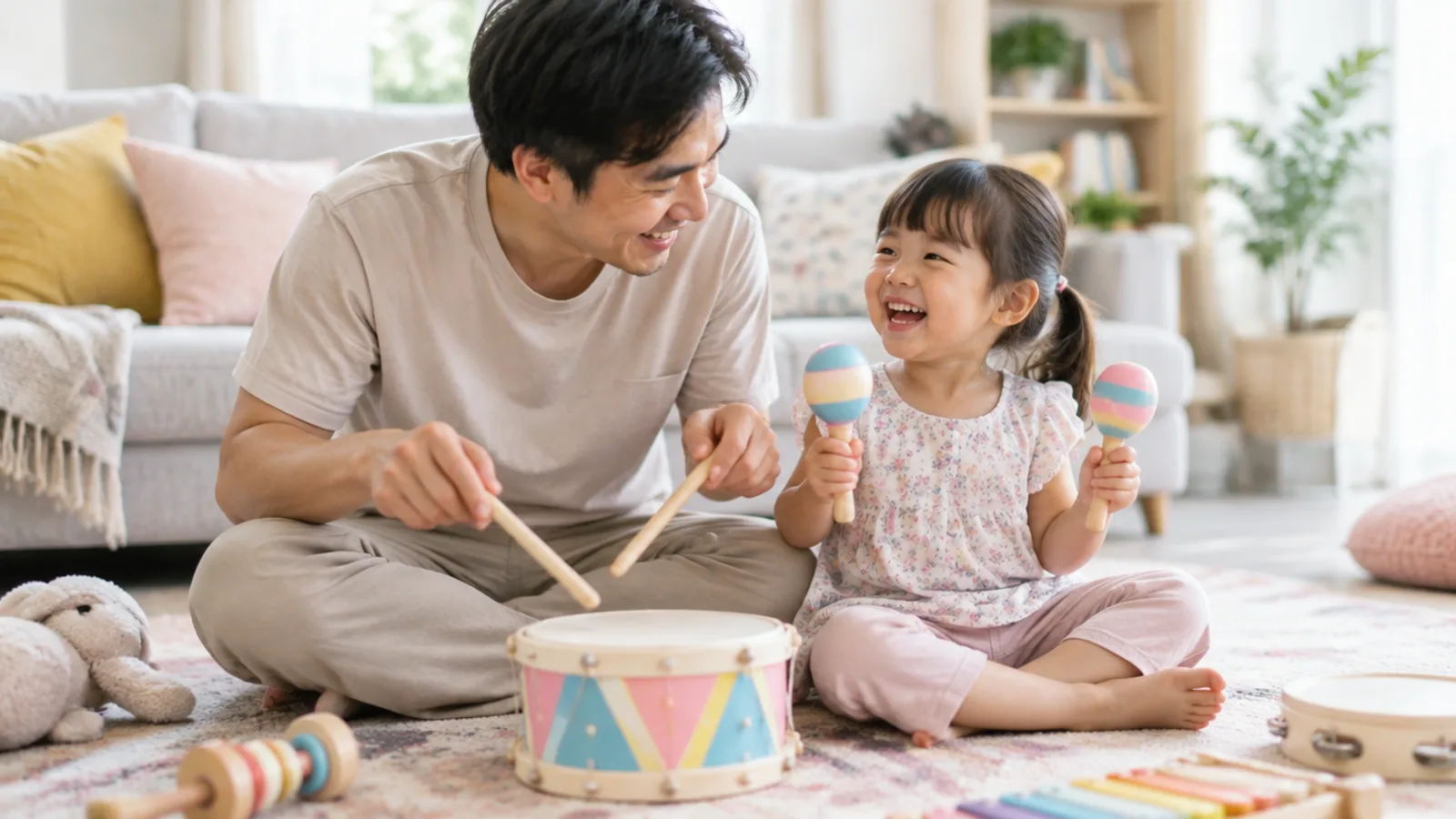
How well does your child remember lyrics and melodies? Do they often enjoy singing and dancing?
If the answer is yes, your child may be showing an interest in music. This article uses musical intelligence as a way to discuss interests and strengths, not as a test of giftedness.
Following the publication of Howard Gardner's book Frames of Mind (1983), the concept of the “Theory of Multiple Intelligences” became familiar in everyday life. Gardner, a developmental psychologist and professor of cognition and education at Harvard University, affirmed what teachers and parents have always said: children can learn in many different ways, beyond the classroom.
In that book, Gardner proposed that each person has a combination of different intelligences. He originally identified seven, later adding naturalistic intelligence to make eight: linguistic, logical-mathematical, spatial (visual and spatial awareness), musical, bodily-kinesthetic, interpersonal, intrapersonal, and naturalistic. Each individual has a different combination of strengths across these areas.
Specifically, musical intelligence is the ability to perceive, appreciate, create, and express musical forms. Playing an instrument is a clear sign of development in this area.
People with a tendency toward musical intelligence can easily hear and remember patterns. They may look for patterns in nature or new information to help them learn, and turn words or language into lyrics or rhymes to remember things. They also tend to have a deep appreciation of music and be sensitive to rhythm and musical sounds. They can readily understand musical structures, notes, and tones, too.
Children show interests at different ages. These behaviors can suggest enjoyable activities involving music and rhythm, but do not establish giftedness or predict achievement.
1. A feel for sound
If your child always enjoys music and is also good at dancing, this is already a sign of musical intelligence. Having a good sense of rhythm means being able to pick up the beat and move in time with the music. This shows that children who dance well understand musical rhythm intuitively.
Does your child like singing?
Children with a talent for music can remember rhythms and lyrics after hearing them just a few times. They often sing in tune and enjoy singing with others.
This is closely connected to how these children learn: they often remember things by turning them into lyrics or rhymes. All these behaviors show a feel for sound, and they may also enjoy tapping or repeating actions. Try noticing: does your child tap their fingers along to music without realizing it?
2. Always looking for patterns
Notice how your child sees the world. Some children try to identify patterns around them, looking for sequences, structures, and patterns in the arrangement of trees, city buildings, or games. For example, when playing with wooden blocks, children who look for patterns will build towers by arranging the blocks in size order.
Pattern play may offer a way to explore rhythm and notation, but arranging blocks does not by itself show musical giftedness.
3. Choosing musical toys as favorites
To identify your child's strongest ways of thinking, watch them at play and notice which activities or toys they prefer. Attempts to imitate sounds in different ways, such as using kitchen utensils to bang, chop, or stir-fry, can reveal a tendency toward musical thinking.
A preference for musical toys can show enjoyment of musical play; it is not a diagnostic sign of giftedness.
Most children enjoy musical toys, but beyond that, listening to music or playing an instrument from an early age can also support their development.
Some research has found that musical activities may be associated with several areas of development, including language, memory, and attention. However, the evidence does not clearly show that music directly makes children more intelligent. What is clear is that singing, listening to music, and playing music with parents are enjoyable activities that help practice listening and strengthen family bonds. (Read more: Musical Toys and Children's Cognitive and Emotional Development)
Parents can play a role in developing their children's musical abilities through simple activities. Singing is a great way to involve your child in music; you can also dance or listen to music together. But the best way to practice musical intelligence is learning to play a musical instrument.
You can give children the opportunity to gain this experience through play, which is the most suitable way for them to learn basic skills.
Musical toys are ideal for introducing children to music learning. They also provide an opportunity to explore different instruments and discover which one your child prefers.
Hape offers a wide range of high-quality musical toys made from sustainable materials, designed to inspire toddlers and preschoolers to experience making music.
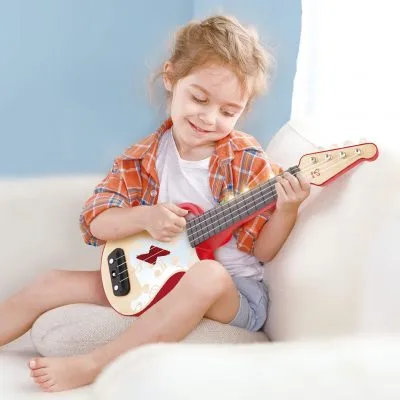
Children can start with the Learn with Lights Ukulele (for ages 3 and up). With flashing lights for children to follow, this toy teaches them to play their first song and explore the world of music in a fun way.
The same system is used in the Learn to Play Harmonica, a harmonica with guiding lights. Children follow the lights to learn each note in the play-along mode as they blow into the harmonica. A red light tells them to blow out, while a blue light tells them to breathe in. Learning the basics of the harmonica has never been this much fun!
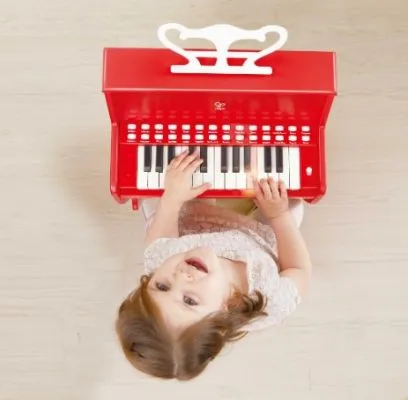
Next, the Learn with Lights Black Piano with Stool lets children explore music on a 25-key electronic piano with light-up keys. They can follow the illuminated keys to learn how to play songs. Once they feel confident, they can choose free-play mode and play along with one of the six included songs. There are also 8 drum rhythms to adjust to their liking.
If you notice signs of musical intelligence in your child, introducing them to instruments or musical toys from Hape can be a wonderful way to develop their abilities further. Consider the Magic Touch Piano, Hape's most awarded toy, as another option, and always choose toys according to the age guidance on the box.
If you are looking for an excellent developmental toy, Hape is a good choice, with a wide range of wooden toys that support children's development at every age.
Thoughtfully designed with children's learning in mind, these toys help children practice important skills such as looking, listening, observing, fine motor control, problem-solving, imagination, and creativity. They also encourage integrated learning through STEAM.
With durable designs and materials, the toys focus on supporting children's development while prioritizing their safety. They use non-toxic paints and FSC-certified wood, are long-lasting, and are environmentally friendly.
Hape is therefore a global wooden toy brand that has received toy awards from numerous organizations and uses production systems based on international standards such as ICTI, ISO 14001, and ISO 9001.
What matters most is sharing happy moments as a family, because wherever there is love, there is a complete home.
Hape Thailand
Love Play Learn
🌐: Browse the full range All Hape Toys
Follow the latest news and promotions FB : Hape Thailand