







There is no denying that music affects us in one way or another. Think of the times we want to release pent-up emotions: singing a song at the top of our lungs or jumping and dancing to a strong beat can help us relax without even realising it.
Music has a powerful effect on young children, too.
Toddlers who are just learning to walk enjoy listening to lullabies or hearing their parents sing.
Enriching your child's life with music from an early age offers many developmental benefits. Introducing music early is about more than entertainment: it can help daily routines run more smoothly and offer lasting benefits.
Music contributes to what experts call the sensory environment and plays a role in neural connections that support brain function.
An environment filled with music also influences emotional, cognitive, social and movement skills. Music inspires creativity, and even language learning and literacy can benefit from early exposure to musical sounds as children grow.
There are many ways to introduce your little one to music and make it a natural part of everyday routines. You do not need to play an instrument or be a singer. Simply start by adding songs to playtime.
Lullabies are a great starting point. Children enjoy listening to bedtime songs, but between the ages of 1–3 years, they respond best to music when they can also try handling instruments that make sounds. Here are four enjoyable ways to bring music into your child's life.
1. Listen to Sounds Around You
From cicadas and rain to the ticking of a clock, rhythm is everywhere in a young child's life. Helping children notice these sounds familiarises them with everyday noises and creates opportunities to make music together.
This simple activity can be a chance to explore musical rhythm. Let your child tap a table or tray with a pencil to the beat, or gently tap their tummy or the back of their hand in rhythm. The tools you use do not matter; the aim is to help your child's ears become familiar with recognising rhythms.
2. Dance as a Family
Put some music on and dance! Most children love dancing, so join your little one and bring rhythm into their routine. Add to the family fun with whatever silly moves come naturally to you; children will love them. For extra excitement, pause the music at random and have everyone freeze in whatever pose they are holding.
3. Make Up Your Own Songs
You do not need to write a song for a record label. Simply add a tune to everyday words or actions, because singing is a wonderful way to engage with music. You can sing about cake ingredients, your child's bath or a nappy change. Even a shopping list can become a song to sing together.
Try making up new words to familiar tunes. Think back to songs from your own childhood. Children will not judge how good you sound; they will enjoy whatever you sing! This activity can encourage your child to understand melodies, develop language skills and practise making up lyrics. (The AAP notes that 2-year-olds enjoy rhymes and repetitive sounds that play with language; see Language Development: 2 Year Olds – AAP.) For even more entertainment, you and your child can sing together with the Mighty Echo Microphone, as though you are performing on stage!
4. Play with Musical Toys
Another fun way to bring music into children's lives is through toys, helping them become more familiar and comfortable with musical instruments.
As they play, children can learn about the cause and effect of making sounds and build self-awareness through sensory exploration.
Giving your little one an instrument also opens the door to creative playtime. Playing music with parents gives children opportunities to make eye contact, smile and communicate with us. (Read more: How Musical Toys Strengthen the Parent–Child Bond)
Wooden toy instruments introduce children to real instruments and the experience of playing music. As children play with musical toys, they become familiar with the aesthetic qualities of instruments and may develop an interest in them in the future.
For your little one's safety, choose musical toys with age-appropriate designs and materials. Always check the recommended age on the packaging, avoid small parts that can come loose, and make sure the battery compartments of toys using button batteries are securely closed. Button batteries are extremely dangerous if swallowed. (How to Buy Safe Toys – AAP)
One example of a musical toy recommended for children aged 12 months and up is a xylophone, which can introduce different tones. Each coloured bar produces a different sound when struck with a mallet, making it ideal for experimenting with notes and hearing how they differ.
Playing keyboard instruments helps develop coordination by teaching children to move both hands at the same time. Have you ever watched children enjoying a toy piano? They really put their hearts into their performances!
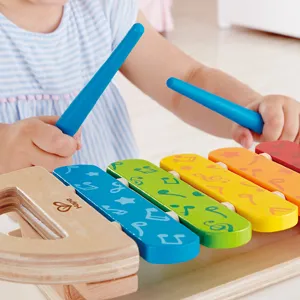
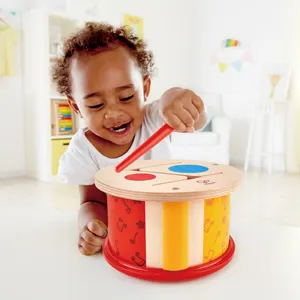
Children often enjoy percussion instruments, too. A drum is a great toy that lets little ones have fun while learning about musical rhythms. A double-sided drum brings enjoyment as they tap out a beat. Children can also learn basic drum rhythms by following colourful flashing lights.
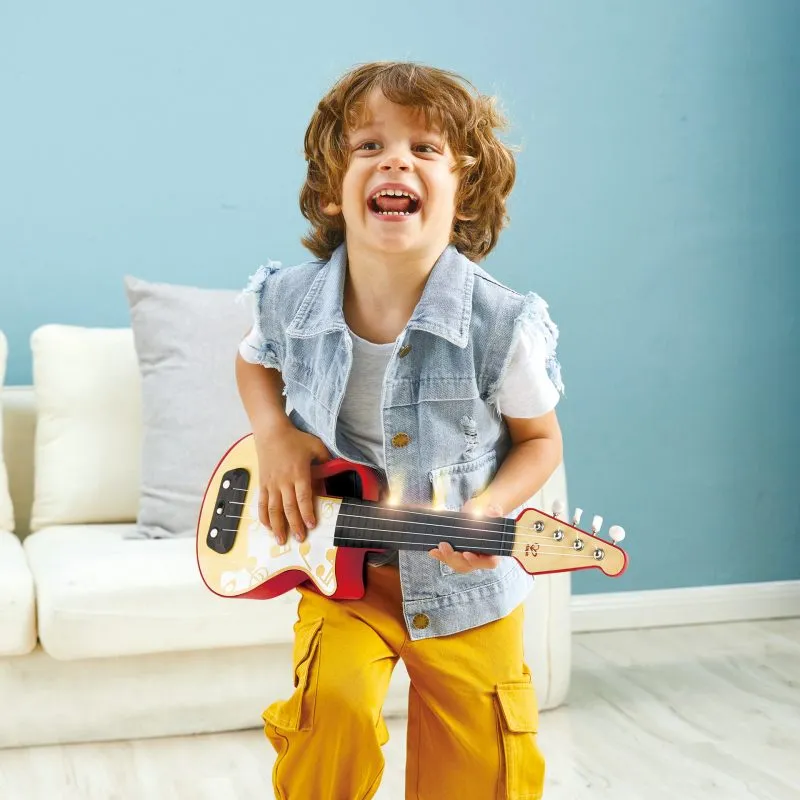
Children love holding a guitar like a Rockstar. A toy guitar is a suitable choice for slightly older children who want to explore playing an instrument more seriously.
Start your little one's musical journey by learning to play favourite songs with the exciting Learn with Lights electric ukulele. (The store listing recommends it for children aged 3 years and up.) Flashing lights guide children on where to press! It comes with instruction stickers and a guidebook, with a redesigned shape that is easier to hold and convenient for your little one to take along.
Which way of introducing your child to music do you like best? We suggest trying several activities and discovering how musical toys can contribute to their development and enjoyment. Read more: How Does Music Benefit Your Little One?
If you are looking for a great developmental toy, Hape is a good choice, with a wide range of wooden toys that support children at every stage of development.
Thoughtfully designed around children's learning, these toys help children practise important skills such as seeing, listening, observing, fine motor control, problem-solving, imagination and creativity. They also encourage an integrated approach to academic learning through STEAM.
Their sturdy designs and durable materials support children's development while prioritising safety. Made with non-toxic paints and FSC-certified wood, they are long-lasting and environmentally friendly.
Hape is a global wooden toy brand that has won toy awards from various organisations and uses manufacturing systems based on international standards such as ICTI, ISO 14001 and ISO 9001.
What matters most is sharing happy moments as a family, because where there is love, there is a complete home.
Hape Thailand
Love Play Learn
🌐: Browse the full range: All Hape Toys
Follow the latest news and special offers: FB : Hape Thailand