







When choosing a wooden toy, look for bright colors, because color can influence people in various ways, including creativity and emotions.
Young children may be particularly sensitive to color, which affects how they respond to their surroundings. Colors do more than send signals to the brain that make children—or us—feel hungry, calm, or anxious. They can also divert attention or enhance children's capacity to learn.
Colors can influence children's moods too, so give some thought to the colors you choose, from bedroom walls to backpacks!
Color and Learning
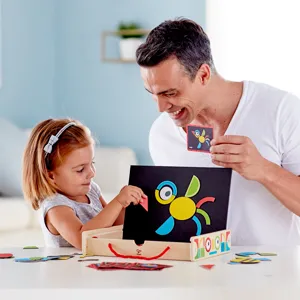
Color is a useful tool for developing children's learning skills. We can use it to support learning by weaving it into their daily routines. Colorful images are good at attracting children's attention, so combining learning material with colorful pictures can make it easier for your child to remember.
Children can learn to associate colors with particular objects from an early age. For example, they often associate red with apples, yellow with the sun, and blue with the sky. Introducing different shades can help them develop association skills and expand their vocabulary.
The next step is connecting colors with deeper meanings. For example, children can begin learning the relationship between red and danger through traffic lights, or associate green with nature. In some cultures, blue also represents sadness, as in the English expression “feeling blue.”
Teaching children about colors and the deeper meanings we associate with them gives them more tools for interpreting and understanding their surroundings.
Color and Emotions
Color is an important element in designing children's learning spaces, helping children reach their full learning potential in a colorful room.
Many people believe that colors affect mood, feelings, and energy levels, although research remains inconclusive. Each person's response to color also depends on their experiences and culture, so it is best treated as a guide to arranging a space rather than a fixed rule.
In general, warm colors such as orange and yellow bring a sense of happiness, while cool colors such as blue and green tend to feel calming. Finding a balanced mix of colors in children's activity spaces, such as classrooms or playrooms, can therefore help create the most suitable learning environment.
💙 Blue often feels calming, making it suitable for a reading nook or a place to relax.
❤️ Red attracts attention and feels stimulating, but too much can make a space feel hectic.
💚 Green feels relaxing and is associated with nature.
💛 Yellow feels bright and cheerful, but too much can look overly intense.
Children may prefer different colors at different ages. Young children are often drawn to bright, clearly contrasting colors, while older children begin developing more individual favorites. Observe your child and let them choose colors they like, for example through coloring.
Newborn babies have blurry vision and are drawn to high-contrast images, such as black-and-white patterns. However, they do not see only black, gray, and white. Babies begin distinguishing some colors, such as red, early on, and their color vision gradually develops during the first few months (HealthyChildren.org).
By around 5 months, most babies can see colors well (American Optometric Association). This is a good time to introduce a variety of colors through toys and picture books. Hanging a brightly colored mobile above the crib can also help stimulate vision (read: 3 Reasons to Have a Mobile). However, it must be securely installed and kept out of your baby's reach, and should be removed when your baby begins pushing up or can reach it.
If you cannot change the room or wall colors to encourage learning about color, toys may offer a solution. Besides supporting learning, they can also serve as practical decorations.
Bright colors and primary colors are very appealing to children! They perceive these more readily than pale shades. Hape understands this well, creating toys with colors that truly capture babies' attention. Recognizing these benefits is why Hape pays particular attention to its color choices.
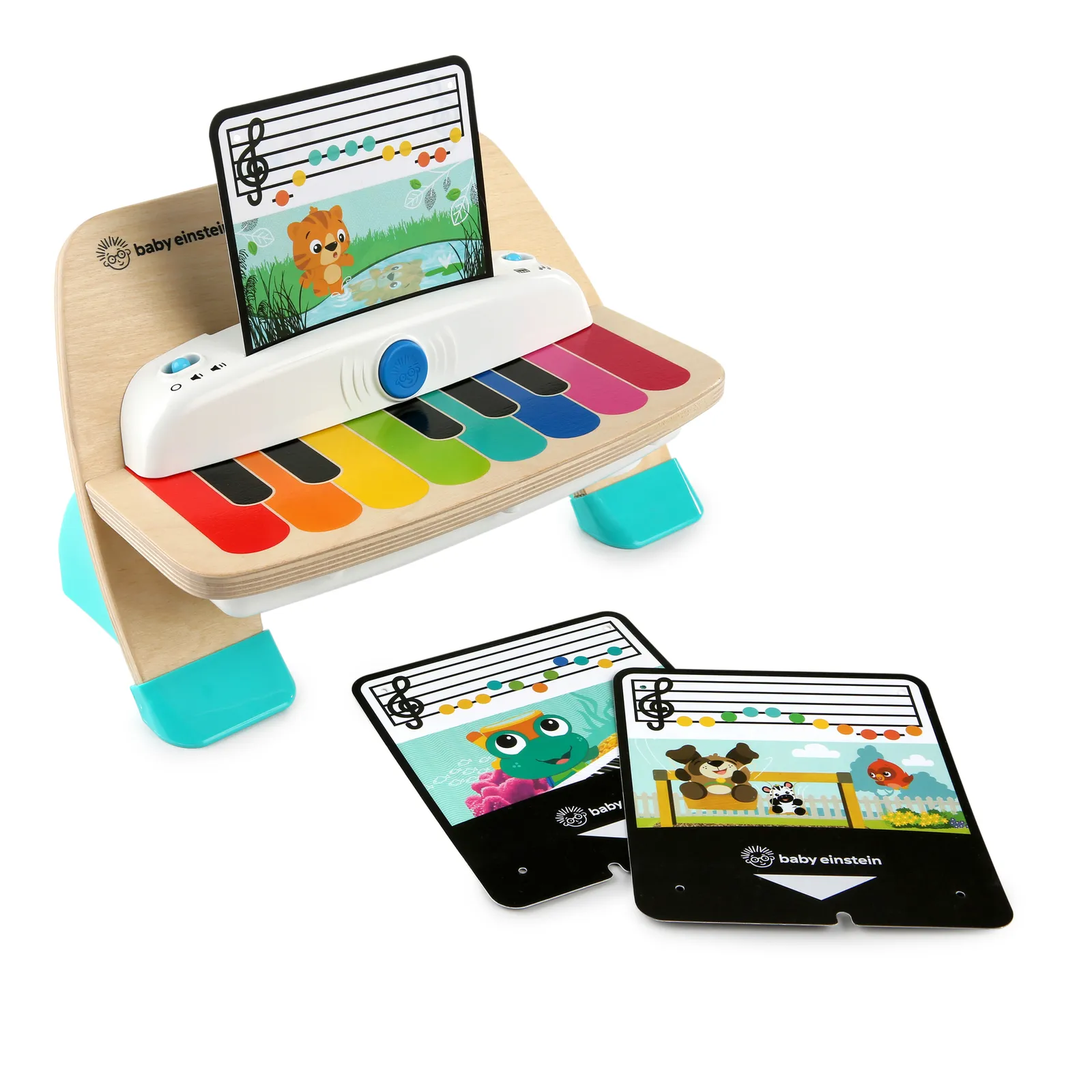
Let your child try pressing the colorful keys of the Magic touch Piano and watch the magic of color unfold! Your little one's touch on the brightly colored keys begins a one-of-a-kind symphony. These colors help support fine motor development as your child practices playing tunes (read more: Magic Touch Piano).
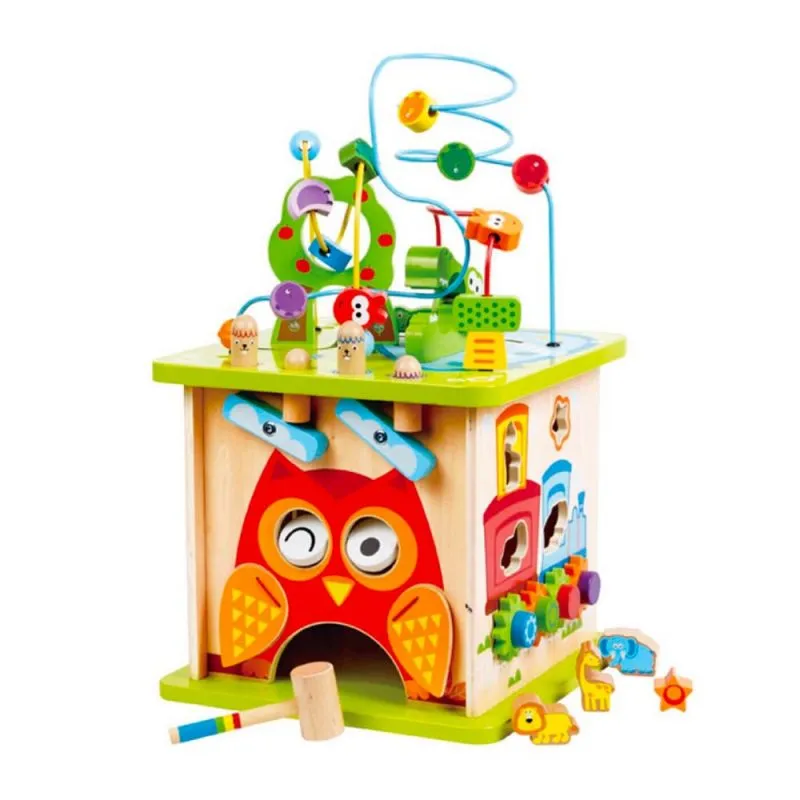
Wild Safari Adventure Center is another of the most colorful toys, sparking imagination with its adorable wildlife theme. It also offers valuable learning time through activities such as navigating a maze, sorting shapes, and playing whack-a-mole. It is no surprise that it is one of Hape's bestsellers, with its colors contributing to its appeal!
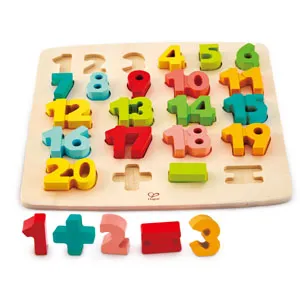
One, two, three! Counting games can be fun, but they can also become repetitive. Try letting your child learn numbers with the Chunky Number Math Puzzle. Remember, “Learning numbers is easier when color is involved!”
These are the reasons children should play with colorful toys, especially those in bright, vivid colors that support learning potential and make playtime more enjoyable, as discussed above. Ready to introduce some new colors to encourage your child's development? Explore colorful toys suited to your child's age at Toys for 6-Month-Old Babies.
If you are looking for an excellent developmental toy, Hape toys are a good choice, offering a wide range of wooden toys that meet children's developmental needs at every age.
Hape, a wooden toy brand founded in Germany, stands out for its colors, fun, and support for well-rounded development at every age.
Thoughtfully designed with children's learning in mind, these toys help children practice important skills such as looking, listening, observing, using fine motor skills, solving problems, imagining, and thinking creatively. They also encourage integrated academic learning through STEAM.
Their sturdy designs and durable materials focus on supporting children's development while making safety a priority. They feature non-toxic colors and FSC-certified wood. Their durability gives them a long useful life and makes them environmentally friendly.
Hape is therefore a global wooden toy brand that prioritizes toy safety standards and environmentally conscious manufacturing.
Hape wooden toys can easily enrich these activities and help keep little ones away from screens.
What matters most is sharing happy moments as a family, because wherever there is love, there is a complete home! What activities do you enjoy with your child? 😁
Hape Thailand
Love Play Learn
🌐: View all products /hape-brand-page
Follow the latest news and special offers FB : Hape Thailand