






How can Hape toys help? What is Montessori education?
These days, this term is coming up more often in education and parenting.
Montessori is an innovative educational system developed by Maria Montessori, an Italian physician and educator (read about its history at the American Montessori Society). It introduced a new approach to the school environment, which later attracted widespread attention and spread around the world. The educational method Montessori developed changed education and the world of toys forever.
At the heart of this approach is being "child-centered." It is based on the idea that children are naturally eager to learn. Freedom is essential, too.
There is no need to force children to learn a particular principle. The world around them naturally draws them into learning. As adults, our role is to observe and offer guidance alongside them, encouraging and supporting every learning experience.
“An environment filled with things to explore”
Maria Montessori believed that children who have the freedom to choose and act in a suitable environment will do so naturally, both at school and at home. What matters is that adults prepare an environment that encourages learning and self-discipline.
Once a space for Montessori learning has been established, another important element in helping children learn quickly is providing useful tools that support independent learning.
To use the Montessori approach at home, start by making things easy for your child to reach. Keep clothes in low drawers, for example, and provide a small stool so children can stand and help Mom cook in the kitchen or reach the bathroom sink to wash their hands independently. An adult should always supervise closely whenever a child stands on a stool. Explore more ideas for toys that help children practice household chores.
Sort toys into separate baskets so they are easier to find, and place them where your child can easily take them out and put them away.
In the Montessori approach, parents should change or rotate children's toys and books every few weeks to maintain their enthusiasm and curiosity and keep them from getting bored (see how to rotate toys).
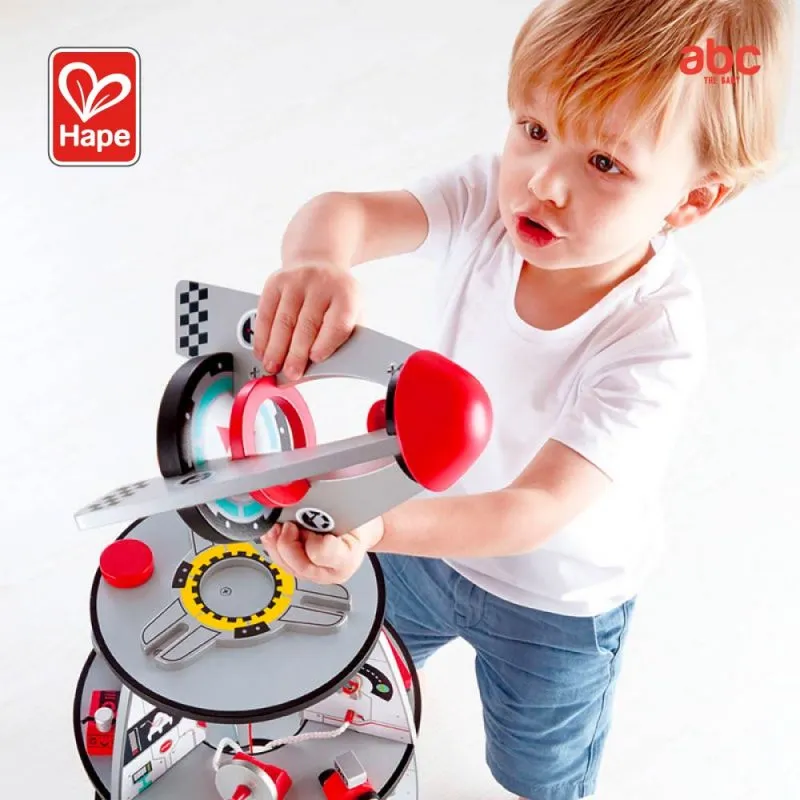
For example, if children are interested in space and stars, arrange the room, create an atmosphere, and prepare toys around that theme for them to explore. When their interest in space begins to fade, move on to something new, whether pets or Viking legends. Children will keep responding to new interests.
Above all, keep encouraging learning and creativity through play!
How does Montessori education relate to toys?
According to the Montessori approach, children can learn many things through play.
When children have the freedom to explore and play, they learn many valuable principles that are important to their growth.
Rule number one: fewer toys, but high quality!
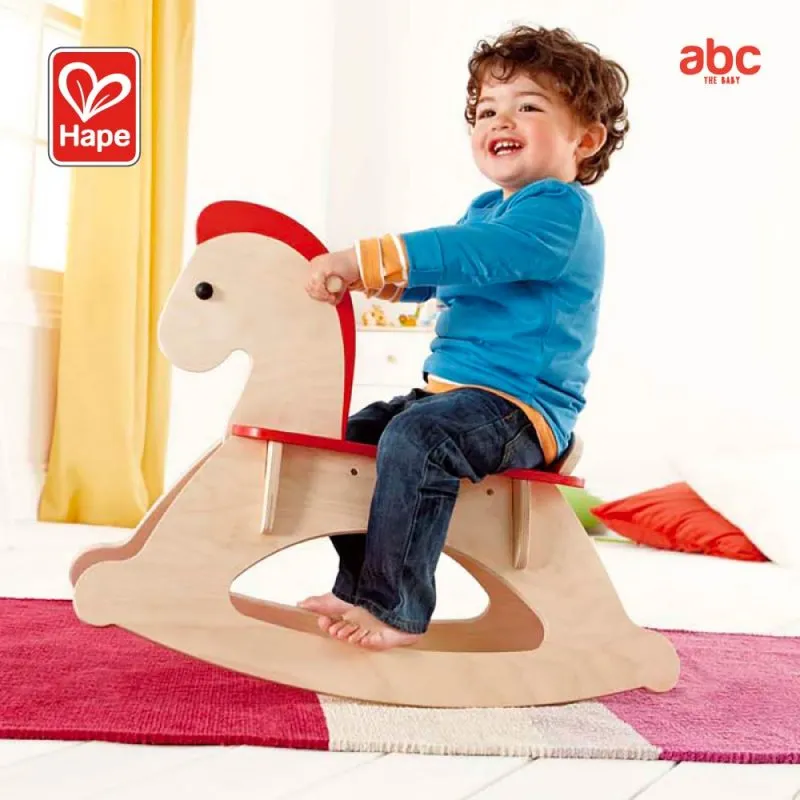
When choosing toys for your child, try the Montessori-inspired principle of "less is more": choose toys made from natural materials, not only for the fun and enjoyment of a new toy, but also to teach children to respect nature. Or choose toys that can grow with them, such as a wooden rocking horse that can be adapted to suit their age.
Toys are powerful tools for cognitive and sensory development!
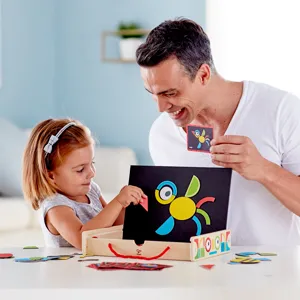
Good Hape toys for Montessori learning encourage imagination and creativity. One example is the Magnetic Art Box, a set of magnetic shapes that children can stand upright and attach magnetic pieces to, following the challenge cards. Children can then have fun creating anything they imagine! (Choose magnetic toys that match the age stated on the box, and check that no small magnets have come loose, as these pose swallowing and choking risks.)
Open-ended toys like these align with the Montessori idea of letting children choose and create for themselves, helping them express their ideas freely.
Beyond improving the quality of education for children, Maria Montessori's greatest achievement was to "reveal the child." A child-friendly environment is essential because it allows children to move and run around freely and learn according to their own perspectives and needs.
The revolutionary idea that "every child is unique" also inspired Peter Handstein, founder of Hape, to adopt the guiding philosophy "Love Play Learn."
Hape toys have been made from natural and sustainable materials since 1986. Each toy encourages children's learning, emotional, and motor skills and helps them develop in age-appropriate ways, because we believe in the power of play as an essential part of learning!
If you are looking for an excellent developmental toy, ‘Hape’ is a good choice. We offer a wide range of wooden toys that support children's development at every age.
Founded in Germany, this high-quality wooden toy brand stands out for its colorful designs, fun, and support for well-rounded development at every age.
Thoughtfully designed with children's learning in mind, the toys help them practice important skills such as looking, listening, observing, fine motor skills, problem-solving, imagination, and creativity. They also encourage integrated academic learning through STEAM.
Their sturdy designs and durable materials focus on supporting children's development while making safety a priority. They use non-toxic paints and FSC-certified wood. Their strength and durability give them a long useful life and make them environmentally friendly.
These qualities have helped Hape become a global wooden toy brand, meeting ICTI, CCIB, ISO 14001, and ISO 9001 standards.
It is easy to see how Hape wooden toys can enrich these activities and help keep children away from screens.
What matters most is sharing happy moments as a family, because wherever there is love, there is a complete home! What activities do you and your child enjoy together? 😁
Hape Thailand
Love Play Learn
🌐: Browse the full range of Hape toys
Follow the latest news and special offers at FB : Hape Thailand