


Visit our stores089-894-9491
My cartDelivery
  • ไทย
  • English
  • 中文
  • Bahasa Indonesia
  • 日本語
  • العربية
ABC the Baby
StokkeTripp TrappJoieTommee TippeeHapeGB Pockit
  • ไทย
  • English
  • 中文
  • Bahasa Indonesia
  • 日本語
  • العربية
  • Home
  • Shop
  • Articles
  • Stores
  • About us
  • Contact us

Get deals and codes first

Add ABC the Baby on LINE for promotions, new arrivals and helpful articles for parents.

Add us on LINE
ABC the Baby

ABC the Baby is a premium baby store in Thailand selling newborn essentials, maternity and hospital-bag items, newborn gifts, strollers, car seats, baby carriers and breast pumps — with stores where you can try the products in person.

About ABC the Baby

  • About us
  • Articles
  • Stores
  • Product warranty registration

Shopping

  • All products
  • On sale
  • Cart
  • Delivery

Help

  • Contact us
  • Returns
  • Privacy policy

Payment

PromptPayVisaMastercardJCBUnionPayAmerican ExpressK PLUSSCB EASYBangkok BankKrungsriTrueMoneyShopeePayLINE Pay

Chat with us

LINE OAMessenger

Our stores · 3 branches

  • Mega Bangna
  • Vibhavadi Rangsit
  • Rama 2
  • Find a store near me
© 2026 ABC the BabyPrivacy policyReturns
HomeProductsDealsGiftsStores

Hi there, welcome!

  • Chat on LINE
  • Chat on Messenger
  • Call us
  1. Home
  2. Articles
  3. Developmental Toys
  4. How Do Wooden Blocks Help 1–2-Year-Olds Learn Math? 😕❓❔
  • Developmental Toys

How Do Wooden Blocks Help 1–2-Year-Olds Learn Math? 😕❓❔

10 Jun 2021Updated 18 Oct 20264 min read
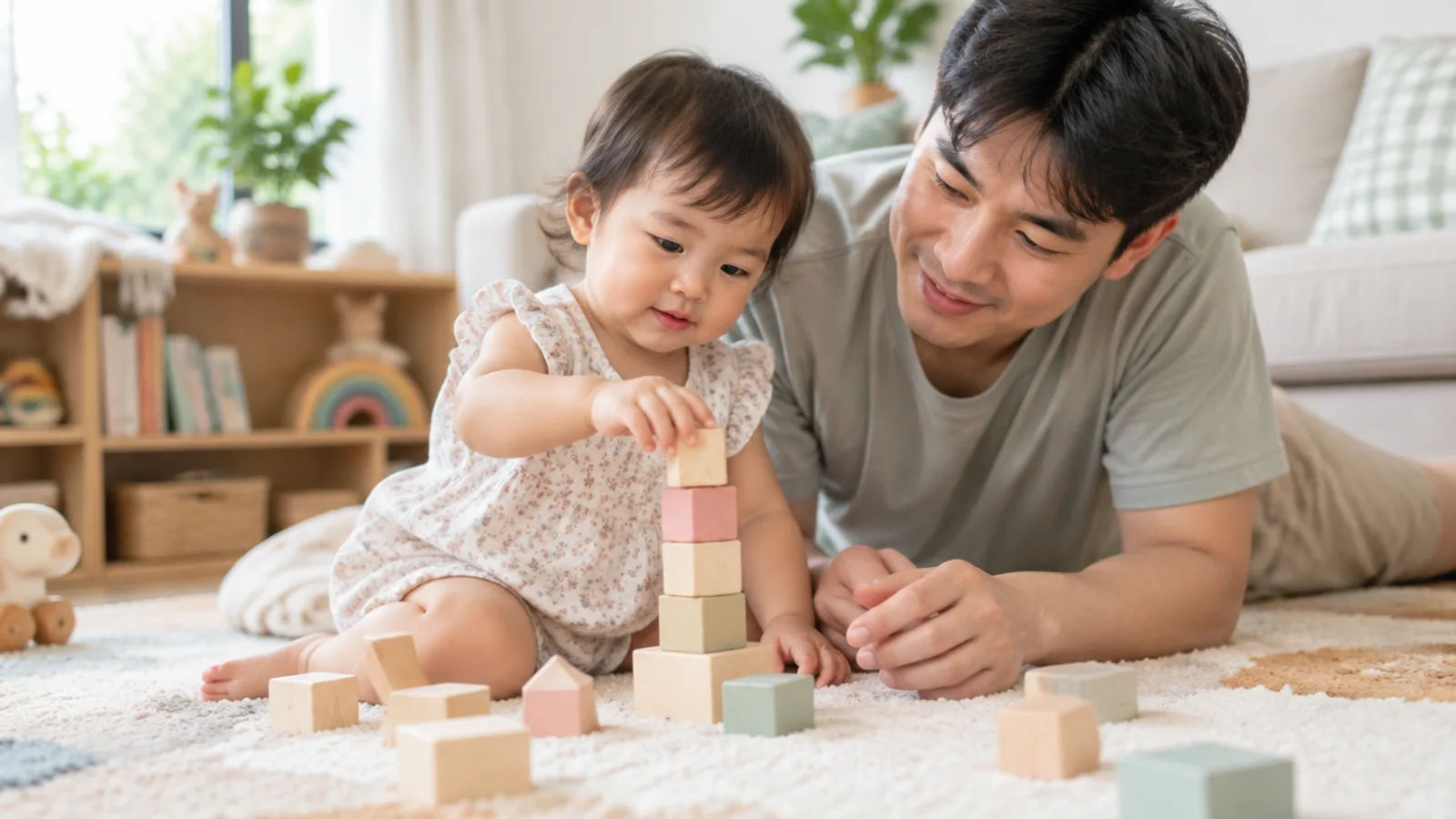
ทารกต่อบล็อกไม้เรียนรู้

Jump to section

  1. Quick summary
  2. With their variety of shapes and colors, wooden blocks are a staple in many families’ toy collections.
  3. Frequently asked questions
  4. References

Try before you buy

Visit our 3 stores to try strollers and car seats in person.

See our storesShop online

Wooden blocks are open-ended toys that introduce children aged 1–2 to math through arranging colors, shapes, and patterns, visualizing geometric structures, and making estimates. Building also encourages children to reason about balance and symmetry so their creations stay standing.

Contents (4 sections)
  1. Quick summary
  2. With their variety of shapes and colors, wooden blocks are a staple in many families’ toy collections.
  3. Frequently asked questions
  4. References

Quick summary

  1. 01

    Blocks are open-ended toys, so children can play for longer without easily getting bored.

  2. 02

    Challenge your child to build a castle, train, or other structure to practice arranging blocks by color, shape, and pattern.

  3. 03

    Stacking blocks without letting them fall helps develop hand-eye coordination and introduces balance and symmetry.

  4. 04

    Encouraging your child to tell stories about their creations, such as a house or castle, also helps develop language skills.

Products mentioned in this article

  • Hape บล็อกไม้หุ้มซิลิโคน 10 ชิ้น 6 เดือนขึ้นไปHape บล็อกไม้หุ้มซิลิโคน 10 ชิ้น 6 เดือนขึ้นไป
  • Hape บล็อกหยอดรูปทรงแปดเหลี่ยม Wooden Wonder Shape Sorter 12 เดือนขึ้นไปHape บล็อกหยอดรูปทรงแปดเหลี่ยม Wooden Wonder Shape Sorter 12 เดือนขึ้นไป

With their variety of shapes and colors, wooden blocks are a staple in many families’ toy collections.

Blocks have been popular for hundreds of years. Although they are simple toys, they are an excellent choice for keeping toddlers entertained and developing their learning skills.

As parents know, children can quickly lose interest in some toys. These wooden toys, however, offer seemingly endless possibilities for fun because they are open-ended, allowing toddlers to build all kinds of things without limits.
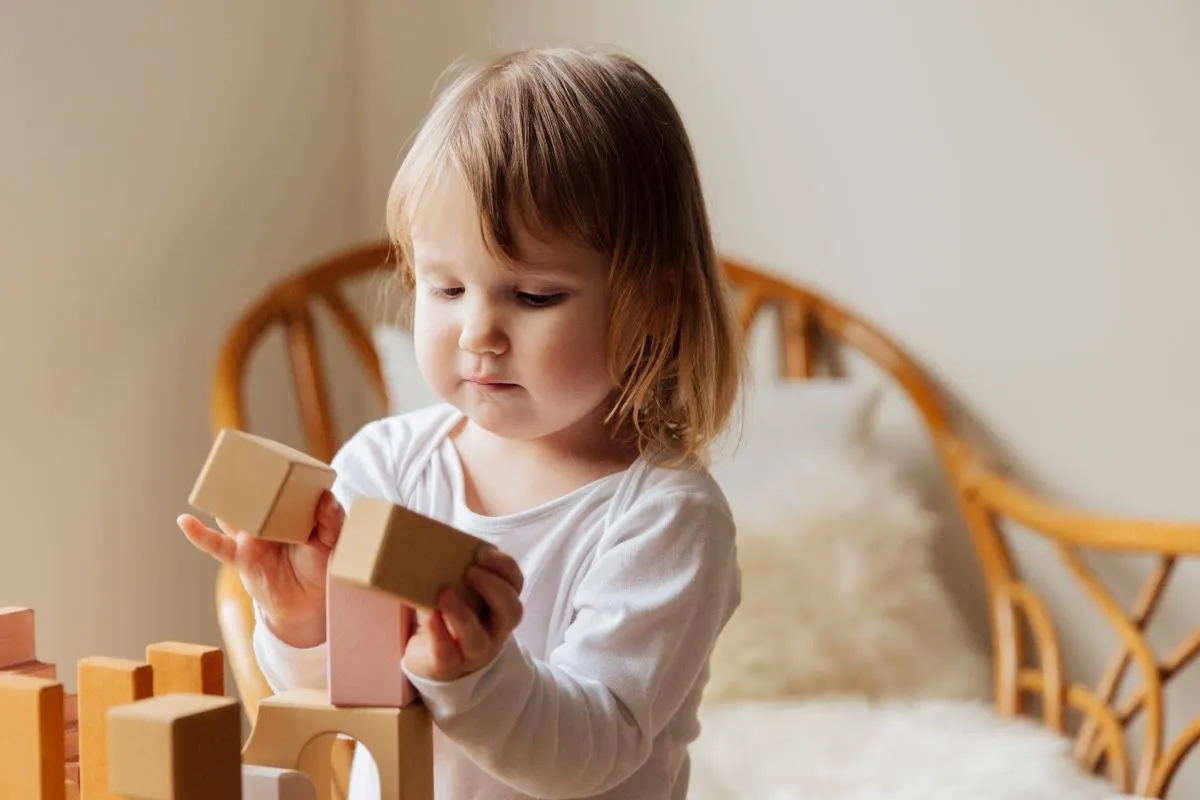
Toddler building with colorful wooden blocks in different shapes

“Explore basic math through block play”

Ages 1–2 are a good time to introduce children to simple mathematical ideas such as numbers, shapes, sizes, and comparisons through play. Playing with blocks is a simple yet exciting place to start (AAP: The Benefits of Play).

See what your child would like to build with their blocks, or offer building challenges for them to choose from while you provide guidance.

For an extra challenge, ask them to build a castle, train, or other structure. Children can explore endless ways to arrange blocks by color, shape, and pattern. This engaging activity holds their attention while helping them practice their fine motor skills and fully express their creativity.

Block play also develops motor skills and hand-eye coordination. Children practice stacking pieces on top of one another while trying to keep their structures from collapsing. They begin to understand that nothing holds the pieces together, so they need to place them carefully to prevent them from falling.
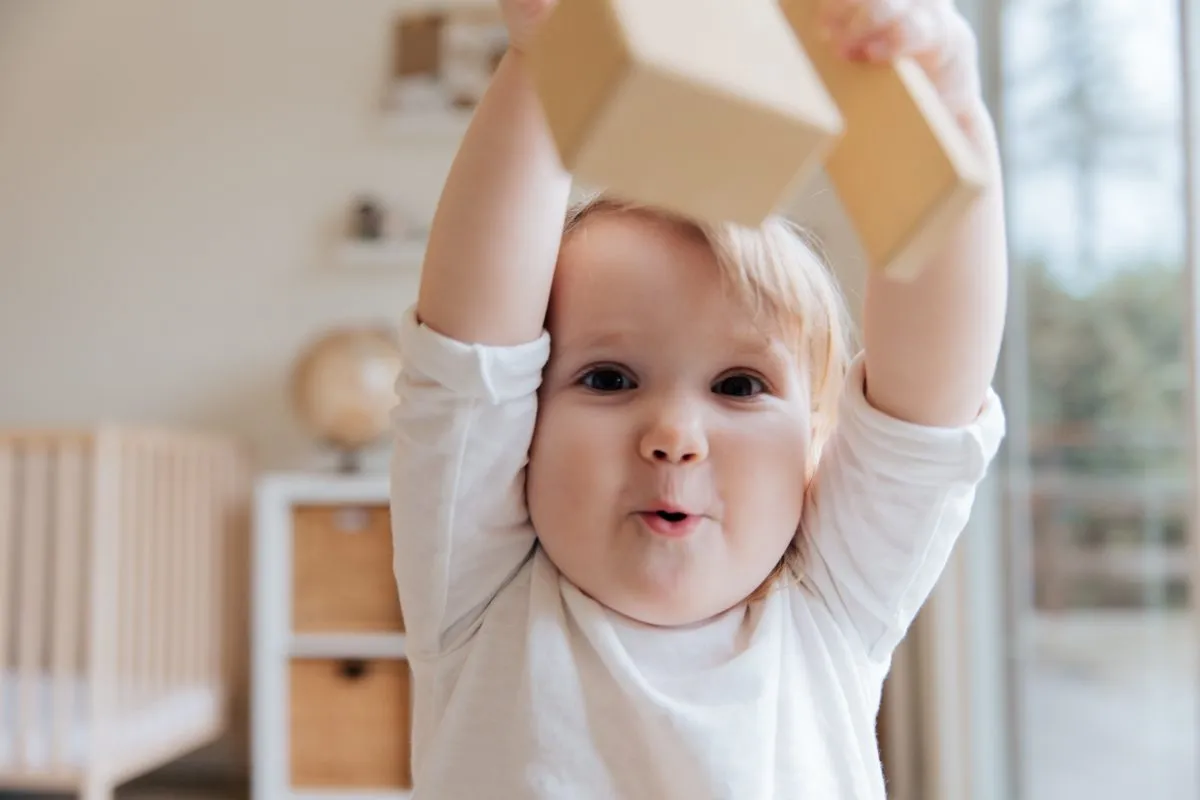
Toddler building with colorful wooden blocks in different shapes

Putting blocks together is open-ended play that lets children design and build something in an empty space, drawing on an image they have already imagined in their minds. This kind of play involves the same ideas used to understand geometric problems: recognizing mathematical patterns, working out arrangements, and exploring possible changes to those arrangements.
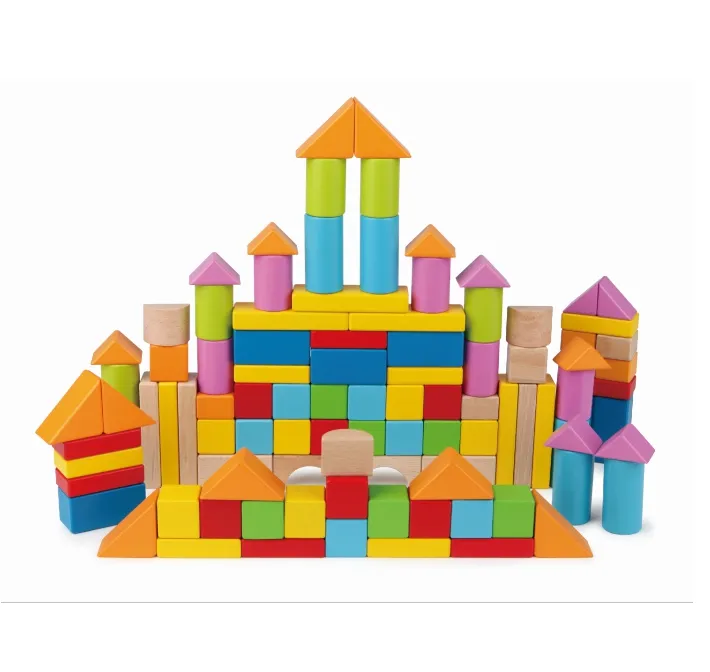
Toddler building with colorful wooden blocks in different shapes

Children experiment with shapes that fit together or choose individual pieces by color. This encourages them to arrange different elements, laying the foundations for mathematical thinking and estimation. If you ask your child to build a house or castle and tell a story about it, you can also encourage their language development.

Children can also develop logic and reasoning skills as they work out how to build a tall tower that will not fall over. They begin to reason about balance and symmetry, making blocks a great starting point for children who dream of becoming architects.

Safety note: Children aged 1–2 still like putting things in their mouths. Choose large blocks labeled as suitable for your child’s age, with no small parts or wooden splinters, and have an adult stay with them while they play (HealthyChildren.org). Find more tips for playing with children this age in Fun Playtime with Your 12–24-Month-Old.

Sets of wooden blocks and building toys in a variety of shapes and colors have inspired generations of designers. Their many shapes and colors offer plenty of fun for both little ones and parents.

If you want to support your child’s mathematical development and help them become a capable problem-solver, remember that block play can help—and Hape has just what you need. Explore toys for this age group at Toys for 1-Year-Olds.
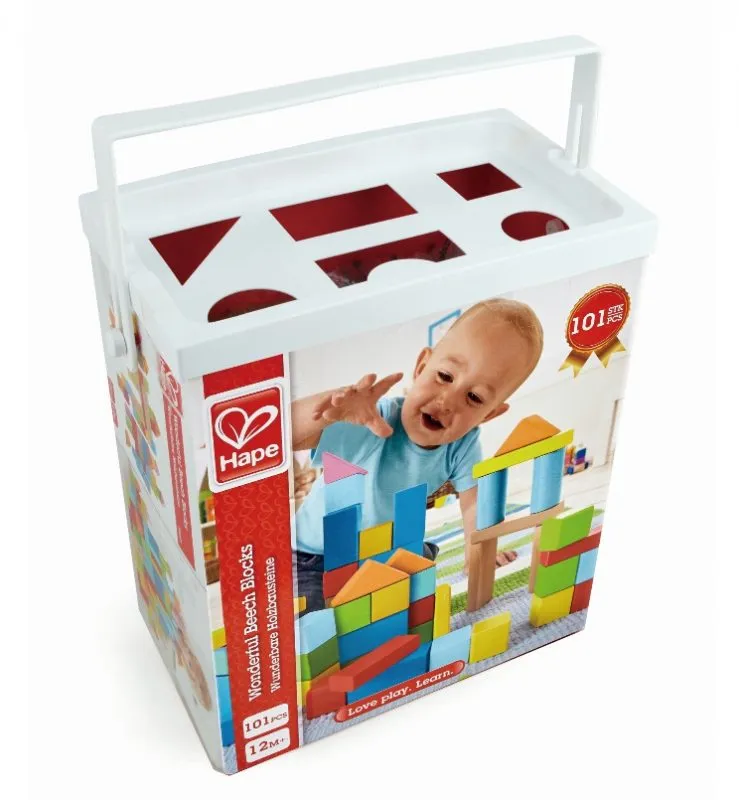
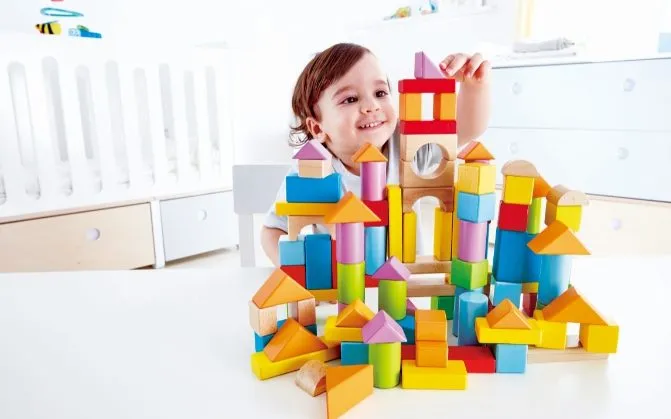
Toddler building with colorful wooden blocks in different shapes

If you are looking for a great developmental toy, Hape toys are a good choice, with a wide range of wooden toys that support children’s development at every age.

Hape is a wooden toy brand founded in Germany, known for its colorful, fun toys that support well-rounded development at every age.

Thoughtfully designed with children’s learning in mind, these toys help children practice important skills such as looking, listening, observing, fine motor control, problem-solving, imagination, and creativity. They also encourage integrated academic learning through STEAM.

With durable designs and sturdy materials, the toys focus on supporting children’s development while making safety a priority. They use non-toxic colors and FSC-certified wood. Their strength and durability give them a long useful life and make them environmentally friendly.

Hape is a global wooden toy brand that places importance on toy safety standards and environmentally conscious manufacturing.

It is easy to see how Hape wooden toys can enrich these activities and help keep little ones away from screens.

What matters most is sharing happy moments as a family, because wherever there is love, there is a complete home! What activities do you enjoy with your child? 😁

Hape Thailand
Love Play Learn

🌐: Browse all products /hape-brand-page

Follow the latest news and special offers FB : Hape Thailand


Frequently asked questions

At what age can children start playing with wooden blocks?

+

The article recommends ages 1–2 as a good time to introduce children to math through block play, with an adult supervising.

How can I use block play to help my child practice math?

+

Encourage your child to sort and arrange blocks by color or shape, or challenge them to build a tall tower that stays standing to practice estimation, balance, and logic.

What other developmental skills does wooden block play support?

+

It helps develop fine motor skills, hand-eye coordination, creativity, and language skills when children tell stories about their creations.

References

  1. HealthyChildren.org (AAP)The power of play how fun and games help children thrive
  2. HealthyChildren.org (AAP)Choking Prevention

Related articles

e3021 3 blog 1
  • Developmental Toys

5 Ways Creative Play Helps Children Learn, Grow and Develop

Did you love playing pretend as a child, imagining you were a superhero, a princess or a pirate? Creative play is one of the best ways to support your child's thinking skills — here are 5 skills it builds and 5 ways parents can encourage it.

24 Jun 20246 min read
e3207 blog
  • Developmental Toys

Strengthening Sibling Bonds Through Play

Do your children seem to argue all the time? Discover toys and shared activities that can help siblings of different ages play together and grow closer.

2 May 20245 min read
หมุนเวียนของเล่น : 8 วิธี ช่วยส่งเสริมให้เด็กเล่นอย่างมีสติ
  • Parenting
  • Developmental Toys

Toy Rotation: 8 Ways to Encourage Mindful Play

Holidays often bring new toys, whether as gifts or purchases from parents. This is a valuable opportunity to teach children gratitude and appreciation for what they have.

17 Apr 20245 min read