






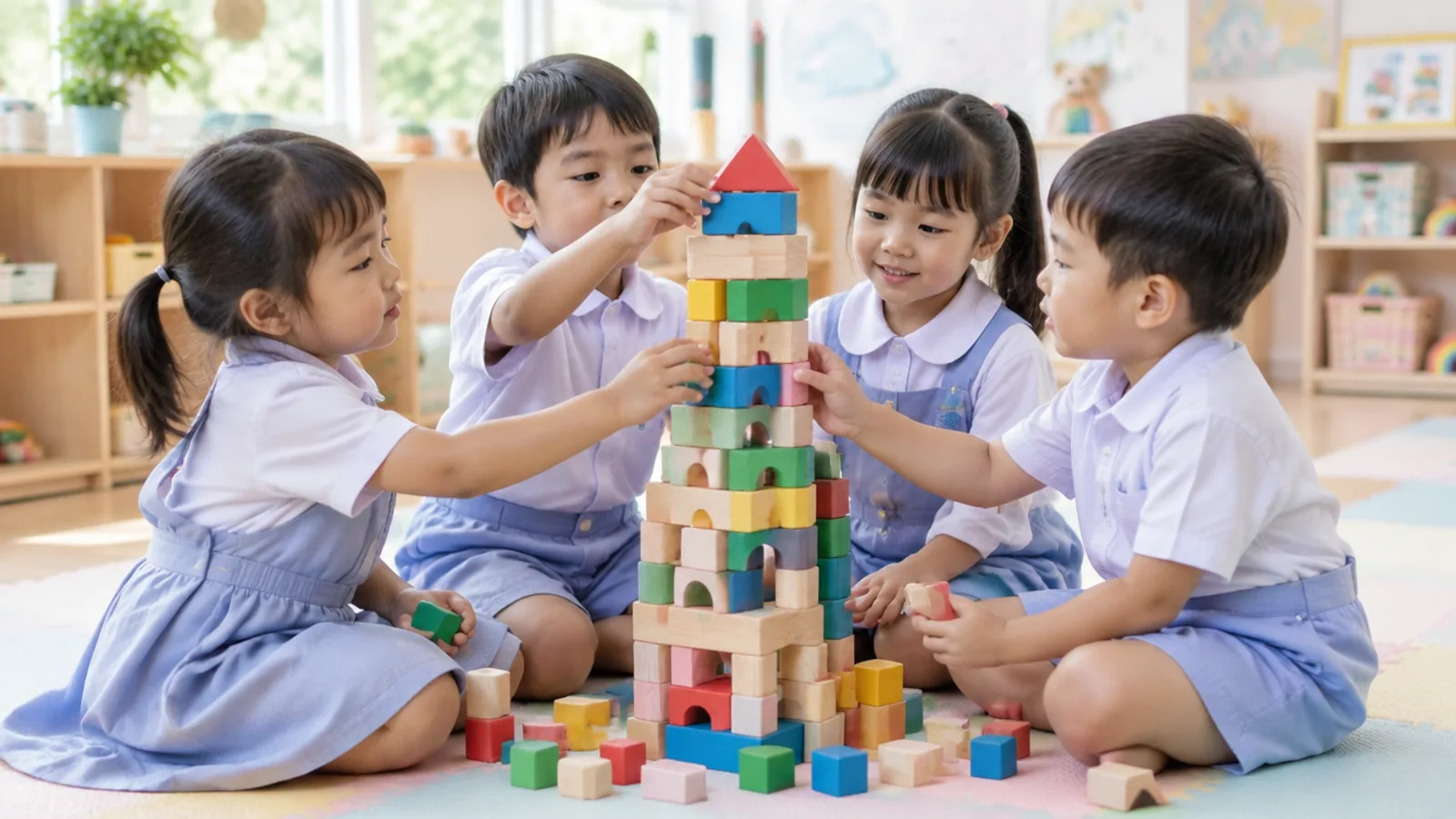
Most parents celebrate their child's first steps, first words, or the first time they finish a whole meal. But there are also social milestones for our children to reach. One is "teamwork": the ability to work with others.
Teamwork is a very important life skill. It means working together in everyday social settings, such as school, sports, and the workplace. Learning to cooperate with people outside the family is therefore an essential part of social life.
Children need to start learning to work with others early, through a particular stage of childhood development: cooperative play.
What is cooperative play?
Cooperation means working together, helping others, and sharing responsibility. Cooperative play is when children play and cooperate with others toward a shared goal or purpose, whether that is winning as a team or earning a reward.
Before children reach this stage, they need to progress through earlier stages of play. During their first few years, children happily play alongside others without necessarily understanding the purpose or engaging in the complex interactions involved in cooperative play.
Children tend to start playing with others at age 3. At ages 4 - 5, they become more involved in group play because they are ready to share toys and understand the importance of coming together as a group.
When children cooperate, they have more positive social interactions and become better at making friends and being a good friend. Parents and teachers can help children develop the skills needed for positive social connections by teaching and encouraging group play from an early age.
Ways to encourage group participation include...
As parents, we can make our family a team. From cooking to shopping, share tasks and show how the family benefits from working together. Involving your child in household tasks helps establish early patterns of teamwork.
Parents can also encourage cooperative play by creating an environment with equipment and activities that focus on sharing, as suggested below. Children will gradually begin learning how to interact with others. Try these ideas and get ready for the next stage of your child's learning.
1. Cook together
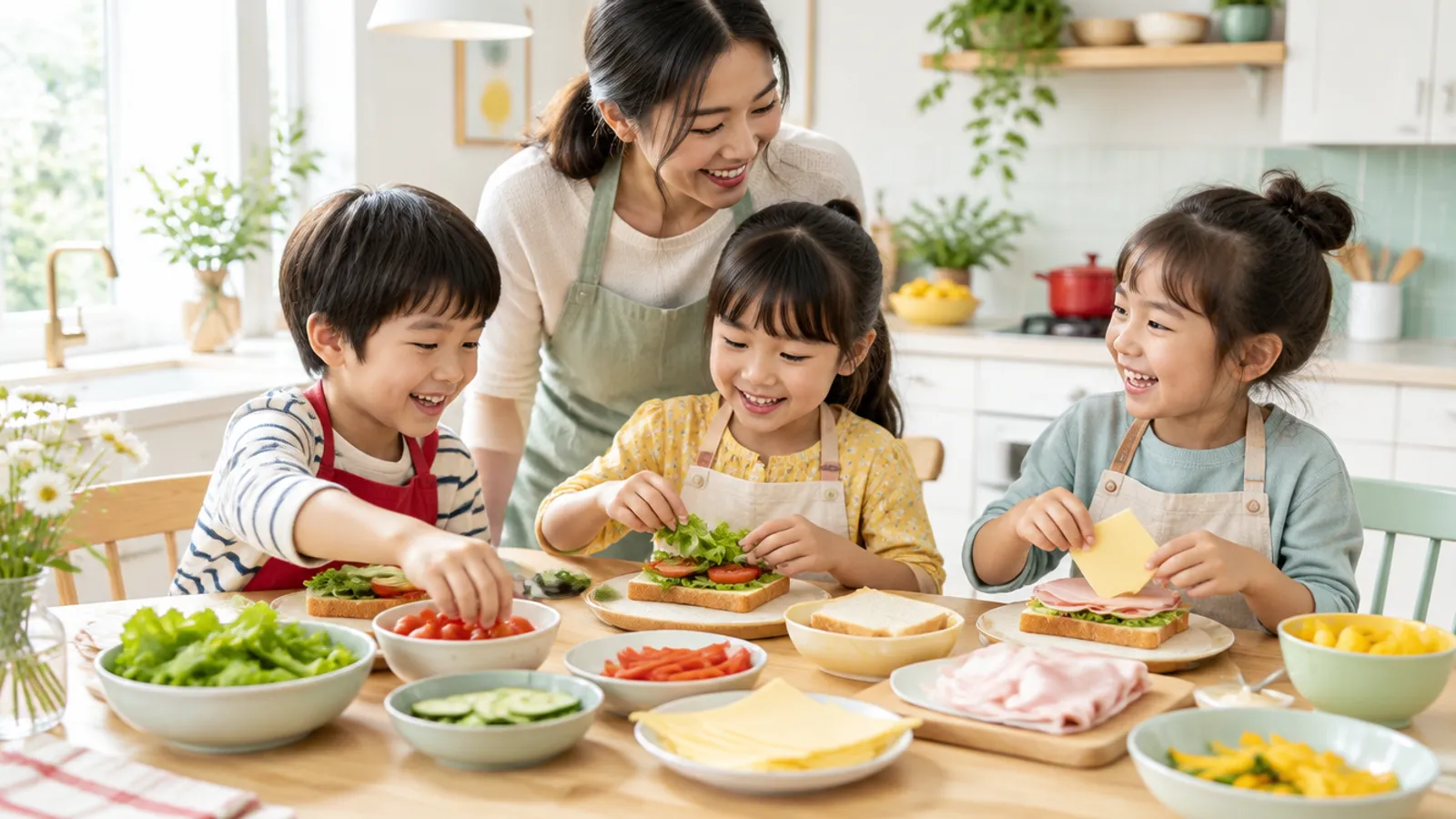
Children love cooking with their parents. Cooking in a small group is a fun way to share tasks and practise working together, as each child needs an assigned role: measuring flour, counting eggs, pouring milk, or stirring ingredients together. Help children understand that each contribution matters in moving the meal preparation to the next step. This helps them see how their work contributes to the ultimate goal: dinner for the family!
Safety precautions: An adult must supervise children closely at all times in the kitchen. Give young children tasks that do not involve heat or sharp objects, such as washing vegetables, tearing salad leaves, measuring flour, or stirring ingredients in a bowl. Keep them away from the stove and hot items, and turn pan handles inward over the stove. Cutting and using the stove are adults' jobs. Do not let children taste raw flour or eggs (Kitchen Safety – AAP, Cooking with Your Children – AAP).
2. Do a jigsaw puzzle
Along with being fun, finding puzzle pieces with others takes plenty of cooperation and communication. Children practise social skills, from correcting misplaced pieces to asking for help finding other pieces. They learn important lessons while playing as a team.
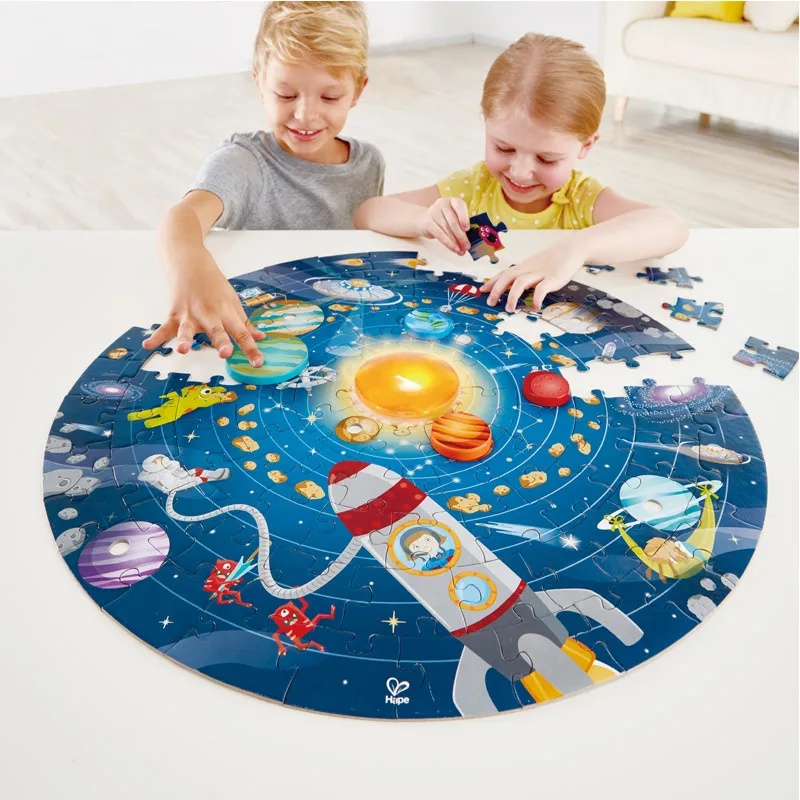
We can model social skills by doing puzzles with our children. For example, when putting together the Solar System Puzzle, we can use kind, polite words to ask for pieces or suggest strategies for solving this fun puzzle. It features adorable planet pieces, a sun with an LED light, and a poster naming all the planets.
You may even find your child becoming more comfortable socialising without much prompting from you!
3. Try role-playing
Role-playing is a wonderful way to teach cooperation as children share specific, fairly realistic roles and carry them out. Pretend play is important for children's development: it helps them develop empathy and let their imagination run freely. It encourages them to face new challenges and find solutions by comparing their approaches with those of others as they play (Read more: Why Children Love Pretend Play).
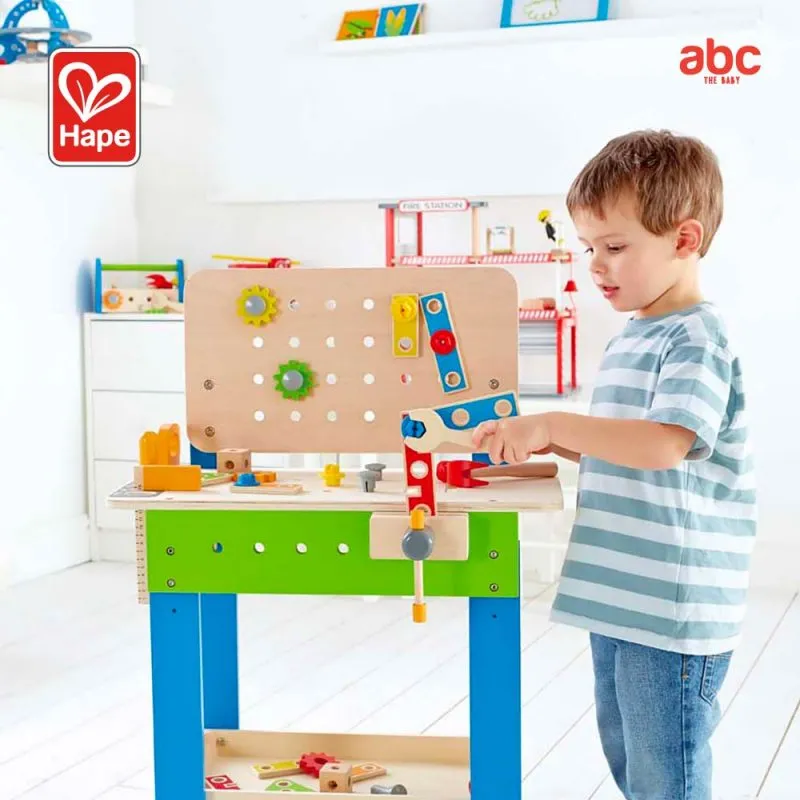
Try pretending to be a master builder and making a pet house with a toy workbench set (Read more: How Tool Toys Bring Children Closer to Science). This lets little builders share big ideas and divide tasks with friends or siblings. For example, one child can tighten a screw while a friend holds the wood firmly to assemble the house frame. A workbench with room for several children to play together is an excellent way to encourage teamwork!
4. Garden together
Another fun and educational teamwork activity is gardening. Invite your children to enjoy planting flowers together!
While you garden and plant, children can take on small responsibilities, such as digging holes, sowing seeds, and watering. Gardening also gives them opportunities to practise cooperation and ongoing responsibility, such as watering plants on assigned days or sweeping up leaves when many have fallen. Having someone to chat with and help in the garden certainly makes it much more fun! Remember to have children wear gloves, wash their hands after gardening, and keep fertilisers and pesticides out of their reach.
Through play, children can learn to share tasks and make an effort to work with others. It is a great way to teach the social skills they will need in the future (See more ideas: 4 Toys That Help Children Make Friends). Which activity will you start with to teach your children teamwork?
If you are looking for an excellent developmental toy, Hape is a good choice, with a wide range of wooden toys that support children's development at every age.
Thoughtfully designed with children's learning in mind, these toys help children practise important skills such as seeing, listening, observing, fine motor skills, problem-solving, imagination, and creativity. They also encourage integrated academic learning through STEAM.
With durable designs and materials, the toys focus on supporting children's development while prioritising their safety. They use non-toxic paints and FSC-certified wood, are long-lasting, and are environmentally friendly.
Hape is therefore a global wooden toy brand that has won toy awards from various organisations and has production systems based on international standards such as ICTI, ISO 14001, and ISO 9001.
What matters most is sharing happy moments as a family, because wherever there is love, there is a complete home.
Hape Thailand
Love Play Learn
🌐: Browse the full range All Hape Toys
Follow the latest news and special offers FB : Hape Thailand