







Giving medicine to a child who struggles to take it can be challenging, but there are ways to help. This article covers how to give medicine, safety precautions, and suitable positions for your little one.
Recommended: Newborn essentials: What should you pack before going out?
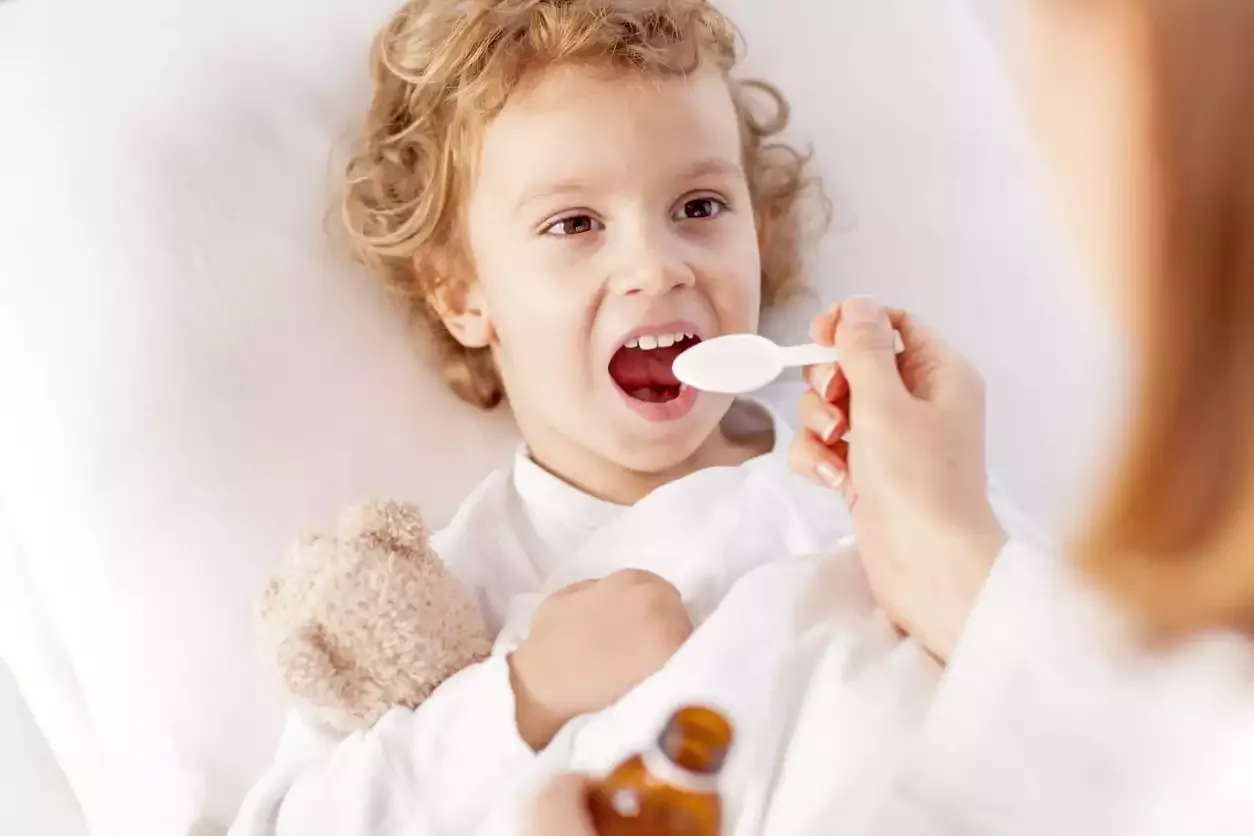
How to give your child medicine when they struggle to take it
Getting ready to give medicine
Giving medicine to a reluctant child can be complicated. Preparing beforehand is an important step toward making the process smoother. Here are some key preparations to help your child take medicine more easily.
- Prepare the medicine before giving it to your child. If it was supplied by a doctor or pharmacist, check the medicine's name on the labeled packaging and make sure the packaging is in good condition and undamaged. For example, check that any plastic seal is intact, and check the medicine's expiry date.
Also prepare the necessary supplies, such as drinking water, the oral syringe or medicine cup supplied with the medicine, and a cloth to wipe your child's mouth. This helps make giving medicine convenient and safe.
| Essential supplies | How to use them |
|---|---|
| Water | Offer a drink after the medicine for children aged 6 months and older. Younger babies can have milk afterward. |
| Oral syringe or medicine cup | Use it to measure the dose specified on the label or prescribed by the doctor. Do not use kitchen tablespoons or teaspoons, as their sizes vary. |
| Cloth | Use it to wipe medicine that spills around the mouth. Do not use it to cover your child's mouth or pinch their nose, as this poses a choking risk. |
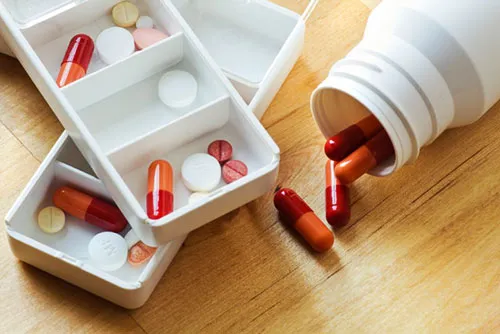
How to give your little one medicine
Giving medicine can feel like one of the hardest parts of parenting. Your little one may dislike the taste or even being held in a sitting position to take it. These simple approaches can help.
- Ask a doctor or pharmacist whether the same medicine is available in a formulation or flavor your child may find easier to take, such as a liquid instead of tablets.
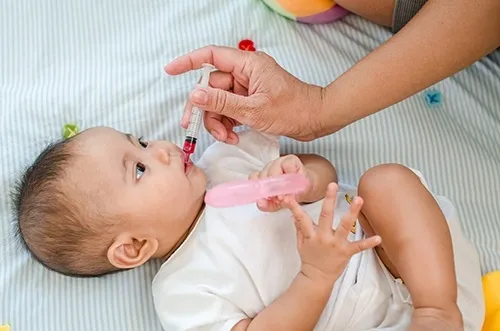
- Use an oral syringe to slowly give small amounts into the inside of the cheek. Wait for your child to swallow before giving more, and do not squirt it straight into their throat.
- Do not divide, break, crush, or mix medicine with food, milk, or fruit juice unless a pharmacist has confirmed that you can. Some medicines may lose their effectiveness or act too quickly. If medicine is mixed into a bottle of milk or a large glass, your child may not finish it and may receive an incomplete dose.
Although giving medicine to your little one can be difficult, helping them feel less afraid is especially important. However, never tell your child that medicine is candy, as they may secretly take some themselves and overdose.
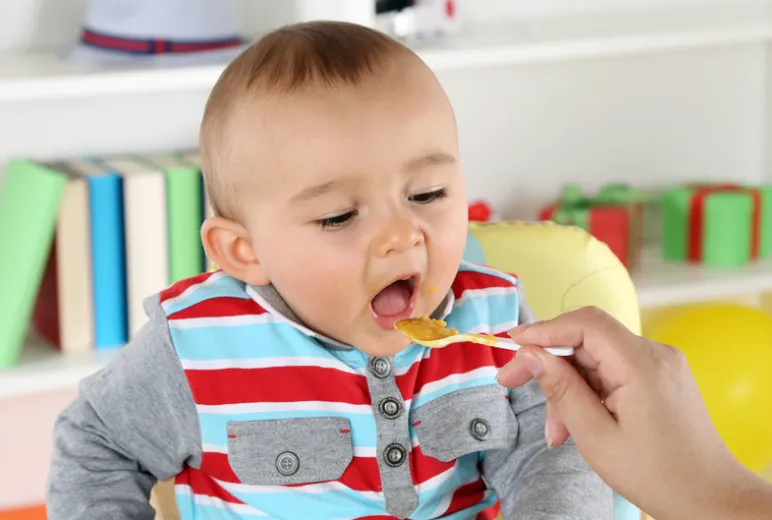
Positions for giving medicine
This section explains positions and techniques that can help your child take medicine more easily and comfortably.
Choose a position suited to your child when giving medicine. An unsuitable position may make them uncomfortable or upset, so try different positions to find one that works well for them.
Here are some examples of positions for giving your child medicine:
- Babies and toddlers: Hold your child on your lap in a semi-upright position, with their head higher than their body. Support their head and give the medicine into the inside of their cheek.
- Children who can sit steadily: Have your child sit upright on your lap or a chair, then give the medicine with an oral syringe or medicine cup.
- Do not give medicine while your child is lying flat on their back, crying hard, or struggling forcefully, as this poses a choking risk. If your child chokes and cannot breathe, read about first aid for a child with an object stuck in their throat and call 1669.
Suitable positions may vary depending on your child's age and abilities. Consult a doctor or specialist for advice on how best to give your child medicine.
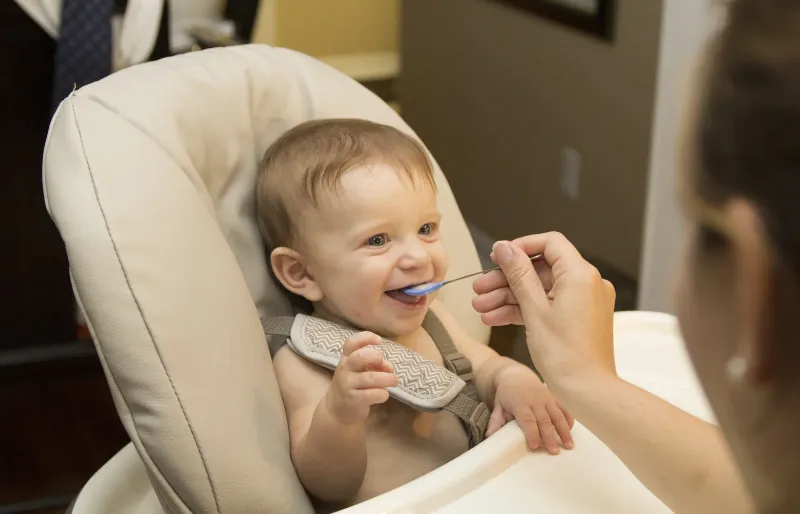
Encouraging your little one
Giving medicine can be very difficult for some parents, but choosing a medicine with an appealing flavor can help make the experience more enjoyable and engaging.
If your child dislikes the taste, first ask a pharmacist which foods or drinks can be taken with that medicine. If the pharmacist approves, you may mix it into a small spoonful of soft food that your child can finish in one mouthful, or offer water or milk afterward to help mask the taste.
You can also use other techniques to encourage cooperation without turning medicine into a toy.
Ways to encourage your child to take medicine
- Praise your child and add a sticker to a chart after they finish taking their medicine.
- Let your child hold a cup of water or a favorite cuddly toy while taking medicine.
- Give a brief, age-appropriate explanation that medicine helps them get better.
Using games during the medicine-taking routine can make the experience more enjoyable while reducing any stress and anxiety your child may feel.
| Giving medicine to a child who struggles to take it | Simple ways to give your little one medicine |
|---|---|
| Ask a pharmacist about a formulation or flavor your child can tolerate. | Use an oral syringe to give small amounts into the inside of the cheek. |
| Offer praise and small rewards after taking medicine. | Reducing stress when giving your child medicine |
These techniques and tips can make giving medicine easier and increase the chances of your child taking it regularly.
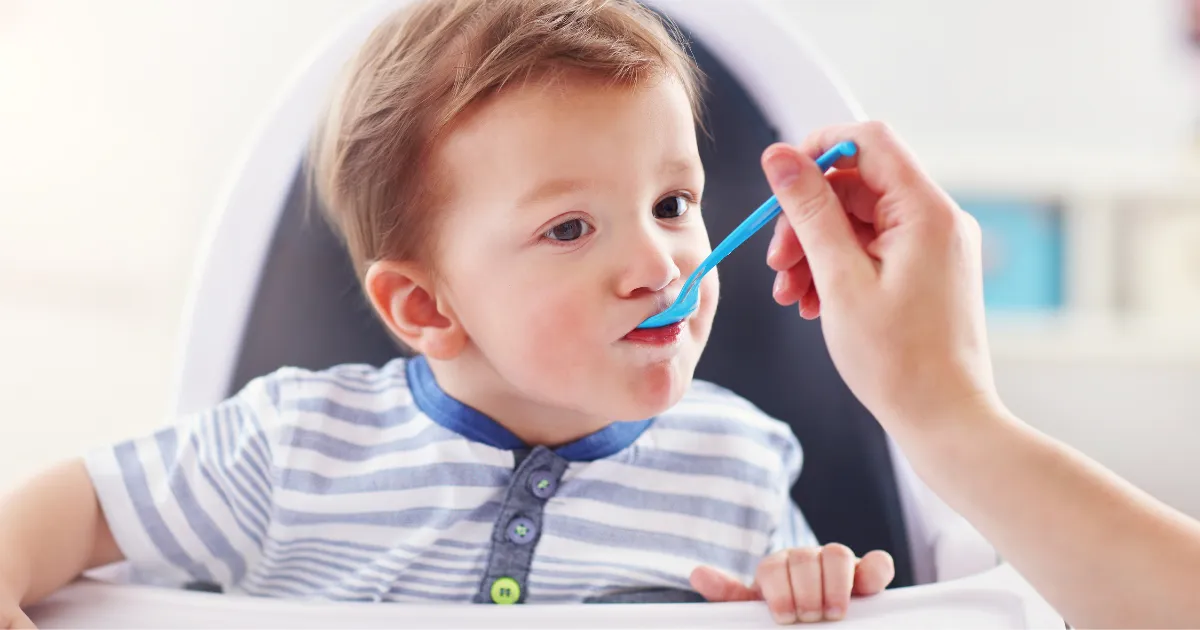
Taking medicine can sometimes make children uncomfortable or stressed, which may make them reluctant to take it. Reducing stress is therefore an important part of the process. Here are some ways to help:
- Create a relaxed environment to help your child feel more confident and at ease. For example, play music, play games, or use activities they enjoy to make taking medicine more fun and less frightening.
- Tell your child a story while giving medicine, such as a fairy tale, or read a book about taking medicine. Use a cuddly toy or a favorite character to help tell the story. This can engage your child's interest and distract them from their worries about taking medicine.
- Allow time for rest and keep medicine-taking times consistent.
Reducing stress can help your child take medicine more easily. However, every child has a different temperament, so you may need to adapt your approach or try several methods to find what works for your child.
Safety guidance for giving medicine
Giving medicine requires care and attention to safety, especially because young children may not yet understand the risks involved. Giving medicine incorrectly can be dangerous and affect your child's health.
An essential step is to check the medicine before using it. Make sure it matches the doctor's instructions and has not expired. If you have any doubts or notice an error, consult a doctor or pharmacist for further advice.
| Tips to prevent medicine-related accidents |
|---|
| 1. Store all medicines in a high place or a locked cabinet, out of children's sight and reach. Close the cap tightly after every use. |
| 2. Read the label before every dose, and give only the amount prescribed by the doctor or pharmacist. |
| 3. Measure medicine with the supplied oral syringe or medicine cup, never a kitchen spoon. |
| 4. Record the time of each dose to prevent accidental repeat doses, especially when several people care for your child. |
| 5. If your child vomits after taking medicine, do not give another dose without first asking a doctor or pharmacist. If your child develops a rash, difficulty breathing, or other unusual symptoms after taking medicine, seek medical attention immediately. |
Read more about children's medicine safety at HealthyChildren.org (AAP) and how to give liquid medicine correctly at Using Liquid Medicines.
These points remind parents to be careful and attentive when giving medicine. Follow the advice of your doctor or pharmacist to help prevent unexpected accidents. Remember that your child's safety is the top priority in their care.
Conclusion
Giving medicine is an important responsibility and can be challenging for some parents. This article brings together essential information to help you give medicine correctly and more easily, as outlined in the guide above.
Start by preparing the medicine and necessary supplies in advance. Creating a suitable environment is also important to help the process go smoothly and effectively.
Simple techniques such as giving small amounts into the inside of the cheek with an oral syringe, holding your child in a semi-upright position, and praising them afterward can make taking medicine easier and more enjoyable.
If your child dislikes the taste, always consult a pharmacist before mixing medicine with food or drinks, and keep medicine out of children's reach at all times. If your child continues to refuse medicine and this interrupts treatment, consult the doctor again. Read more about common childhood illnesses during the rainy season.