






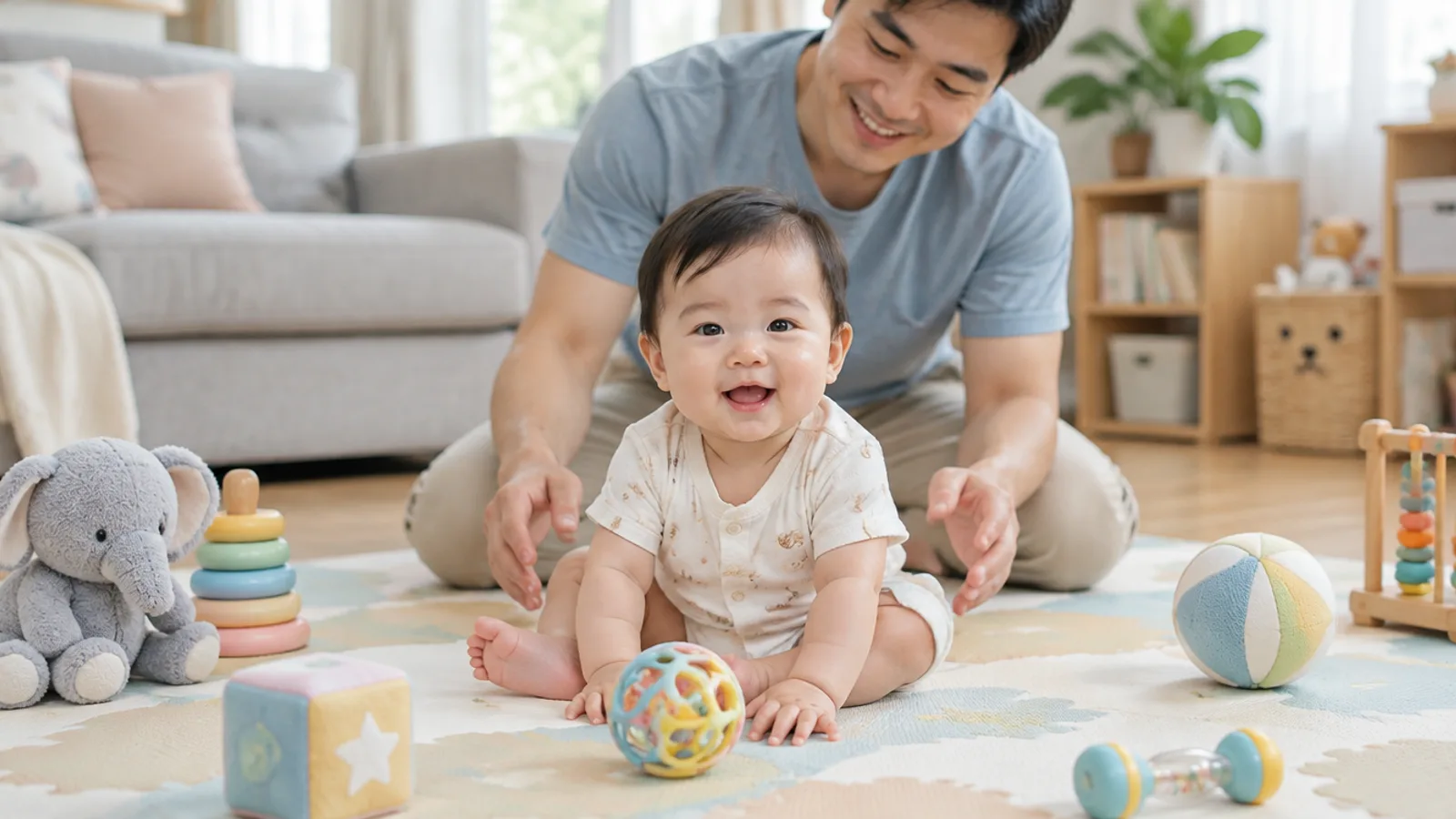
Once your baby can control their head and hold it upright independently, the next milestone to look forward to is sitting on their own. If you are wondering when babies can sit up, this article has the answer. Let's explore when your baby may start sitting and how you can support them appropriately.
When can babies sit up?

Babies may begin sitting independently at around 6–8 months, but individual differences mean that development varies. Some babies reach this milestone earlier or later than others. The timing depends on each baby's physical readiness and strength. Generally, babies begin sitting without support at around 6–7 months and can sit upright more confidently at around 8–9 months. However, sitting should develop at a pace appropriate for each baby. Monitor their development carefully and follow your doctor's advice at scheduled health checkups. According to HealthyChildren.org (AAP), most babies can sit steadily without support by around 9 months.

When to see a doctor: If your baby is 9 months old and still cannot sit even with a little support, seems unusually floppy or stiff, clearly uses the arm and leg on one side more than the other, or loses skills they previously had, consult a pediatrician for a developmental assessment. (Read more: 5 Signs of Developmental Delay in Your Child)
Reasons your baby may not want to sit
There are several reasons why a baby may not sit at the expected stage. Some babies develop this skill more slowly, but it is important to give your baby time and support so they have opportunities to become more confident sitting independently. Here are some possible reasons your baby may be reluctant to sit or have difficulty doing so.

Different rates of development: Babies develop at different rates. Some may take longer than others to develop the balance and strength needed for sitting and may need more time before they can sit upright steadily.
Unfamiliarity: Sometimes babies are not yet interested in sitting or feel unsteady when placed in a sitting position because their core muscles and balance are not sufficiently developed.
Health problems: If you are concerned that your baby is not sitting after the expected age, consult a doctor for a health assessment and advice or support for any health problems that may make sitting difficult.
Muscle limitations: Some babies may have muscle problems that make sitting difficult. Further medical assessment may be necessary.
How can you help your baby practice sitting?
You may be wondering how to support your baby when they reach the stage of learning to sit. Here are some ways to help.
Show interest and encouragement: Pay attention to your baby and encourage them to try sitting. Use toys or objects that encourage movement to attract their attention. Choose a suitable space: Let your baby practice sitting on a flat, reasonably soft surface, such as a play mat. Place pillows or cushions around them to soften a fall while an adult sits beside them, and do not leave your baby sitting unattended on a sofa or high bed.
Offer support: While your baby tries to sit independently, gently support their hips or waist with your hands, then gradually reduce the support. Let your baby place their hands on the floor in front of them for balance. This helps them learn the sitting position and become steadier.
Give time and encouragement: Do not rush your baby's development. Allow enough time to practice sitting and support them in developing at a comfortable pace.
Build muscle strength: Give your baby opportunities to move, such as tummy time while awake and supervised by an adult. This helps strengthen the neck, back, and shoulder muscles. Also allow time for enjoyable play that involves movement.
Play games and activities: Developmental activities and games include placing toys in front of or beside your seated baby for them to reach for, or having them sit on your lap and gently sway to music. These activities help develop balance. Choose toys for 6-month-old babies that are large enough not to fit into their mouth.
Precautions: Babies learning to sit still have poor balance and can fall at any time. Do not let them play near stairs or raised surfaces. Install stair gates and stay close to your baby throughout sitting practice.
Encourage your baby to sit independently through regular practice without making them feel pressured. Practice should be enjoyable and give them opportunities to develop appropriately. Offer care, guidance, and support suited to your baby's individual development. If you have questions or concerns about your baby's development, consult a doctor or child development specialist for further advice.
Once your baby can sit steadily, they can start using a high chair with a safety harness. Alongside advice on helping your baby learn to sit, ABC the Baby has gathered more parenting tips for you. Explore them here.