






Is Your Child Quick to Anger? 4 Ways That May Help
It is normal for children to lose their temper sometimes. They may pound their chest or flail their arms when disappointed or made to do something they do not want to do. Some days, they may suddenly seem upset for no obvious reason, leaving us feeling that our child has a bad temper.

Many parents may be alarmed by their child's temper, irritability, or angry behaviour and wonder, “Is something wrong with my child?”
If your child gets angry easily or frequently struggles to control their emotions, remember that anger is driven by feelings. It is normal for children to feel angry when they are upset. They may have argued with a classmate at school and feel so bad about it that they take it out on those around them. This is not unusual.
When children feel angry, they should receive help rather than punishment. Try to understand that your child is communicating something through their inappropriate behaviour. A child who bottles up their feelings is carrying distress inside, without yet having the skills to manage those feelings or control how they express themselves when angry. Observe your child and try talking about what has upset them or whom they are angry with to uncover the source of the problem. This is the first step towards helping them manage their own anger.
Many factors can cause anger and frustration, making children irritable. One common trigger is frustration when they cannot get what they want, or feeling anxious about something. An anxious child may feel under pressure and lose control.
Do not forget tiredness. Children can have busy schedules too, with long school hours or extracurricular activities leaving less time to play and relax. As we know, play helps children relieve stress and develop self-control. Without time to unwind, children may express their frustration through anger.
When children feel powerless, they may express it through anger because it is the easiest way for them to release their feelings.
As a family, we all need to learn ways to manage frustration. This can help reduce conflict between children and parents.
Method 1: Stay Calm and Be There for Your Child
We need to stay calm when our children are angry. Remaining composed, even while your child is angry, helps them feel safe. Once they feel safe, they can gradually become less worked up and find it easier to calm down.
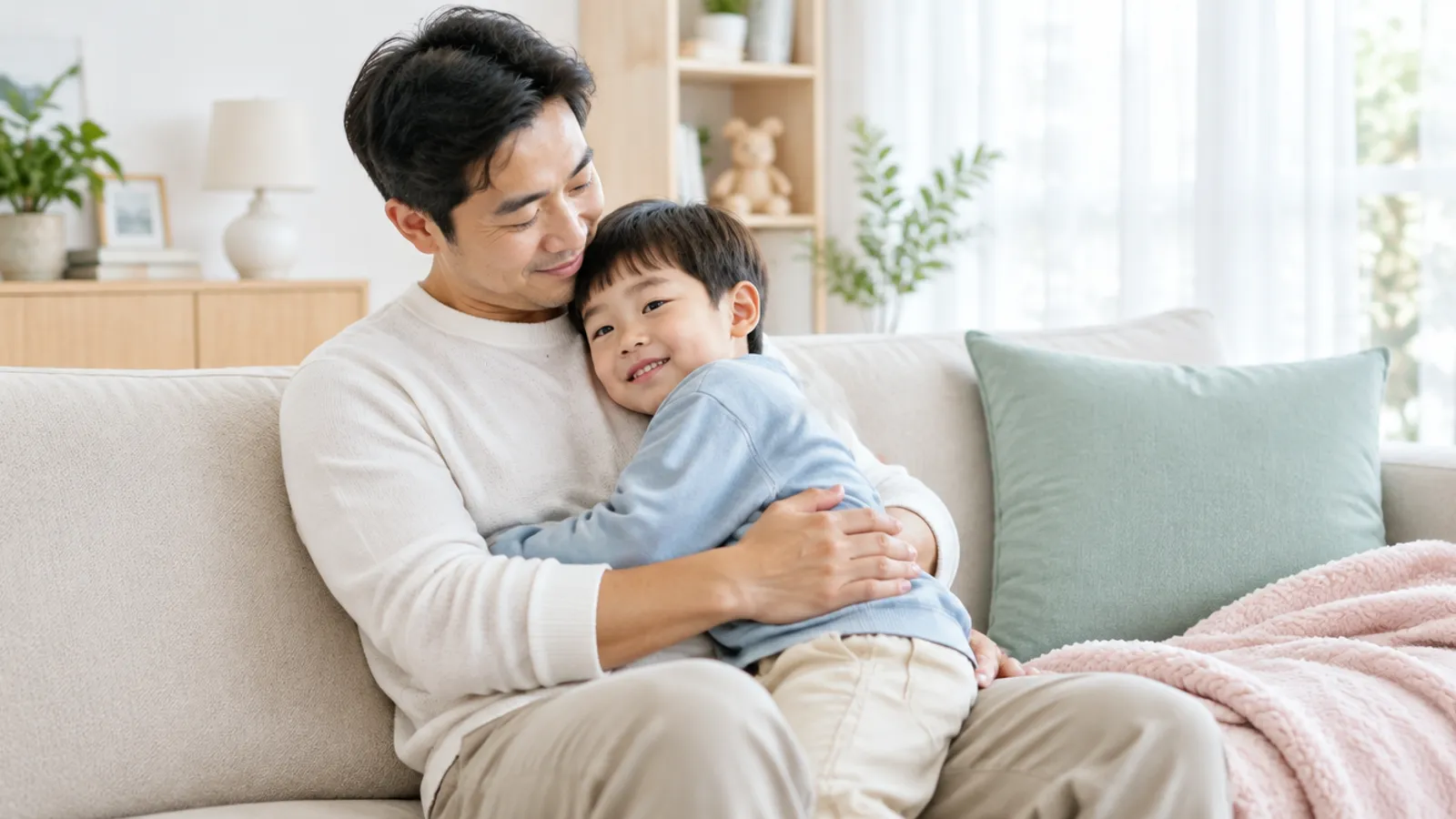
When your child loses their temper or becomes upset easily, take them away from the situation to a safe place where they can settle down. Also stay nearby and offer a calming presence, so they do not feel they must face these feelings alone. A parent's attention can help prevent an outburst. Add reassuring body language by holding them in a close hug, because children need warmth and closeness when they feel uncertain, confused, or nervous.
Method 2: Let Your Child Release Anger Through Movement
If a hug does not help, you can encourage your child to express their anger through physical movement. Make up a song and do an “angry dance” together. For young children, a pull-along toy can help them focus on walking with their little walking companion, gradually letting go of their anger.
Method 3: Sit Down Together and Talk About Feelings
Next, sit down and talk together. As a parent, encourage your child to express their feelings by asking, “How did you feel when this happened?” Talking about this can help children manage their anger and calm themselves. If your child does not want to speak directly to you, let them talk to a pet, a favourite stuffed toy, or an imaginary friend. They may feel more comfortable that way. Give them space to talk and play on their own while quietly keeping an eye on the situation.
Method 4: Use Role Play to Express Feelings
Use role play to express feelings. Role play is always helpful. Children learn to take on and manage the role of another person. Doing so helps them empathise with that character and act as that person would. This is not an escape from the real world. Pretend play is a very important activity for children's development because it helps them build empathy and imagination. It also teaches them to control their own behaviour.
During role play, children often learn how to express their feelings effectively. They may naturally weave things that have happened to them into the roles they are playing. This gives parents a valuable opportunity to create pretend situations that introduce ways of managing their child's understanding and feelings.
For example, you could suggest a simple scenario: “Let's pretend you feel angry because you asked to play with your friends, but Mum said no,” or “Let's pretend you asked to go outside, but Mum would not let you.” This helps children anticipate what might happen and prepare themselves to cope with refusal or disappointment.
Using role play to manage feelings may work well if your child is familiar with it. Encourage pretend play during your child's playtime by providing suitable role-play toys and encouraging them to join in and enjoy it.
Role play is a versatile tool for parents. Start with simple pretend play, which can also support many areas of development. (Read more: Why Do Young Children Love Role-Play Toys?)
When to Consult a Doctor or Child Psychologist
Tantrums are common in children aged 1–3 years and usually improve as they grow older. However, consult a paediatrician, child psychiatrist, or child psychologist if you notice any of these signs.
- Your child's anger is unusually intense, prolonged, or frequent, and is not improving or is getting progressively worse.
- Your child repeatedly hurts themselves or others, or damages belongings.
- Your child holds their breath until they turn blue or faint during a tantrum.
- Your child still has frequent tantrums beyond preschool age, or their behaviour affects sleeping, eating, learning, and social interactions.
- You feel too stressed to cope.
Asking for help does not mean you have failed as a parent. It can help you identify the cause and find an approach that suits your child sooner. (Sources: HealthyChildren.org (AAP) and NHS.) Find more ways to teach your child to manage feelings in Teaching Children to Control Their Emotions and What to Do When Your Child Throws Things in Anger.
If you are looking for a great developmental toy, Hape toys are a good choice, with a wide range of wooden toys that support children's development at every age.
Thoughtfully designed around how children learn, these toys help them practise important skills such as looking, listening, observing, using fine motor skills, problem-solving, imagination, and creativity. They also support integrated academic learning through STEAM.
Their sturdy designs and durable materials focus on supporting children's development while making safety a priority. They use non-toxic colours and FSC-certified wood. Their strength and durability give them a long useful life, making them environmentally friendly.
Hape is therefore a global wooden toy brand that places importance on toy safety standards and environmentally conscious manufacturing.
This makes Hape wooden toys an easy addition to activities that keep little ones away from screens.
What matters most is sharing happy moments as a family, because where there is love, there is a complete home! What activities do you enjoy with your child? 😁
Hape Thailand
Love Play Learn
🌐: Browse all products /hape-brand-page
Follow the latest news and special offers FB : Hape Thailand